Boneless Leg of Lamb Recipe (Garlic Herb Roast)
Make this boneless leg of lamb recipe with a garlic-herb crust, juicy slices, and crisp potatoes for an easy, impressive roast dinner at home.
Prep
20 minutes
Cook
45 minutes
Rest
15 minutes
Total
1 hour 20 minutes
Servings
4
Difficulty
Easy
Cut
Boneless leg of lamb
Method
Oven roasted
Safe internal temperature
63°C / 145°F
Nutrition per serving
621 calories
- Protein
- 52g
- Fat
- 38g
- Carbs
- 23g
- Fiber
- 4g
- Sat. fat
- 14g
- Sugar
- 2g
- Sodium
- 610mg
Nutrition values are estimates based on the listed ingredients and serving size.
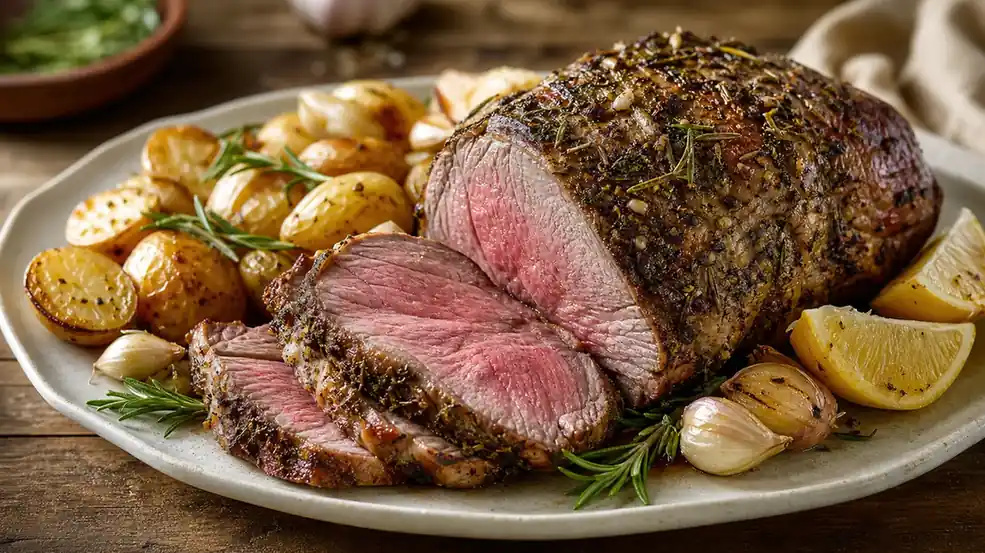
This boneless leg of lamb recipe delivers a golden garlic-herb crust, tender pink-centered slices, and potatoes roasted in the same pan. It is a good fit for a relaxed weekend dinner or a small celebration: a boneless roast cooks evenly and carves without much fuss.
The oven starts hot for color, then drops to a moderate temperature to keep the lamb juicy. Rosemary, lemon, garlic, and olive oil bring out the meat’s rich flavor instead of masking it. Use a thermometer for doneness, since the shape of the roast and the accuracy of your oven matter more than the clock.
Why You'll Love This Recipe
- Familiar pantry ingredients make a roast that still feels worthy of company.
- Baby potatoes cook beside the lamb, so dinner comes together in one pan.
- A boneless roast slices neatly into portions.
- Internal temperature, rather than the clock alone, guides the cooking.
- Leftovers work well in sandwiches, grain bowls, and salads.
Boneless Leg of Lamb Recipe Information
| Detail | Amount |
|---|---|
| Preparation time | 20 minutes |
| Cooking time | 45 minutes |
| Resting time | 15 minutes |
| Total time | 1 hour 20 minutes |
| Servings | 4 |
| Internal temperature | 63°C / 145°F |
The listed temperature gives you a medium-rare to medium roast after resting. For a more done roast, cook until the center reaches 68°C / 155°F. Insert an instant-read thermometer into the thickest part, away from a tied seam and the roasting pan. The rest matters: the lamb finishes cooking gently and stays juicier when sliced.
Ingredients
- 1 boneless leg of lamb, about 1.1 kg / 2 1/2 pounds, tied
- 2 tablespoons olive oil, divided
- 5 garlic cloves, finely minced
- 1 tablespoon chopped fresh rosemary
- 1 teaspoon dried oregano
- 1 teaspoon finely grated lemon zest
- 1 1/2 teaspoons fine sea salt
- 3/4 teaspoon freshly ground black pepper
- 700 g / 1 1/2 pounds baby potatoes, halved if large
- 1 medium red onion, cut into wedges
- 1 lemon, cut into wedges
- 1/2 cup low-sodium chicken stock or water
- 1 tablespoon chopped fresh parsley, optional
Step-by-Step Instructions
1. Bring the lamb closer to room temperature
Take the lamb from the refrigerator 30 minutes before roasting. That brief rest takes the chill off the surface and helps it cook more evenly; do not leave raw meat out for longer than 2 hours. Heat the oven to 220°C / 425°F with a rack in the center.
Pat the roast very dry with paper towels. A dry surface browns better, while a wet one tends to steam. Leave any butcher’s string in place during roasting so the lamb holds an even shape.
2. Make the garlic-herb rub
Mix 1 tablespoon olive oil, garlic, rosemary, oregano, lemon zest, salt, and pepper in a small bowl. Rub it all over the lamb, working a little into the seams. The oil helps the herbs cling to the meat and encourages a well-browned exterior.
In a large roasting pan, toss the potatoes and red onion with the remaining tablespoon of olive oil and a pinch each of salt and pepper. Spread them in an even layer, leaving room in the center for the roast, then set the lamb on the vegetables.
3. Start with high heat
Roast for 15 minutes at 220°C / 425°F to caramelize the surface and start browning the potatoes. Without opening the door, reduce the oven to 180°C / 350°F and continue cooking for 25 to 35 minutes.
Start checking the center with an instant-read thermometer at the 25-minute mark. Rotate the pan if one side is browning faster. If the potatoes look dry, pour the stock or water around them—not over the lamb—to prevent scorching and add a little savory pan moisture.
4. Cook to the right temperature
Take the roast out when the thermometer reads 60°C / 140°F; it should finish near 63°C / 145°F as it rests. Exact cooking time depends on the roast’s thickness, starting temperature, and your oven. A smaller or flatter roast may be ready sooner, which is why temperature is more useful than a fixed minute count.
Transfer the lamb to a warm board or platter and tent it loosely with foil. If the potatoes need more color, leave them in the oven, stir once, and roast for another 5 to 10 minutes. They are ready when a knife slips in easily and their edges are browned.
5. Rest, slice, and serve
Rest the lamb for 15 minutes, then remove any string and slice across the grain. Thin slices will be especially tender. Spoon the roasted potatoes, onion, and pan juices around the lamb, then finish with parsley and lemon wedges to cut through the richness.
Tips for Best Results
Choose a roast that is fairly even in thickness. On a sharply tapered piece, the narrow end can overcook before the center is ready. Fold that tail under and secure it with kitchen twine if needed, or ask your butcher to tie the roast.
An instant-read thermometer takes out the guesswork. For an irregular roast, check several spots and use the lowest reading from the thickest section. The temperature will rise a few degrees during the rest.
Fresh rosemary has the best aroma, though dried rosemary works in a pinch. Crush dried rosemary finely before adding it to the rub so it is not woody. Keep lemon zest in the rub, and add lemon juice only at the table; acid applied too early can interfere with browning.
Ingredient Substitutions
Use thyme, or a mix of thyme and rosemary, in place of the rosemary. For a warm spice note, add 1/2 teaspoon ground cumin to the rub. You can replace 1 tablespoon of the olive oil with Dijon mustard for a sharper crust; choose a simple mustard without alcohol-based ingredients.
Small carrots, parsnips, or chunks of sweet potato can replace some of the baby potatoes. Cut firm vegetables to a similar size so they finish together. To roast vegetables separately, put the lamb on a rack in a shallow pan and add stock to the pan to keep the drippings from burning.
What to Serve With Boneless Leg of Lamb
The roasted potatoes make this boneless leg of lamb recipe a complete meal, but a crisp cucumber salad or lemony green beans add freshness. Warm flatbread is handy for the pan juices. For more aromatic main dishes, browse lamb recipes and weeknight dinner ideas.
For a meal of smaller plates, serve the roast with lamb kabobs, or make a lighter poultry dish such as oven-baked chicken thighs another night. Rice pilaf, couscous, and tomato salad also suit the simple garlic-and-herb flavor.
Storage Instructions
Refrigerate leftover lamb and potatoes in shallow, airtight containers within 2 hours of serving. They keep for up to 4 days. When you can, store sliced lamb with a spoonful of pan juices to help keep it from drying out.
For longer storage, freeze cooled sliced lamb in a freezer-safe container for up to 2 months. Freeze the potatoes separately if possible, since their texture softens after thawing. Thaw frozen lamb overnight in the refrigerator, never on the counter.
Reheating Instructions
Warm lamb gently so the rosy center does not turn gray and dry. Put slices in a covered baking dish with a splash of stock or pan juices and heat at 150°C / 300°F until warmed through, usually 10 to 15 minutes. Reheat potatoes on a baking sheet at 200°C / 400°F until hot and crisp again.
For a quick lunch, microwave covered lamb at 50% power in short intervals with a spoonful of liquid. Reheat only what you plan to eat, and do not repeatedly chill and reheat the same portion.
Frequently Asked Questions
How long does a boneless leg of lamb take to cook?
A 1.1 kg / 2 1/2-pound roast commonly takes about 40 to 50 minutes with this two-temperature method, plus resting time. Start checking early because shape matters more than weight alone. Cook until a thermometer reaches your preferred doneness.
Should I cover boneless leg of lamb while roasting?
No. Leave it uncovered for browning and a flavorful crust. Tent it loosely with foil only while it rests, which keeps it warm without trapping steam against the crust.
Can I prepare the lamb ahead?
Yes. Rub the lamb with the herb mixture, cover it, and refrigerate for up to 12 hours. Take it out 30 minutes before cooking. Keep the vegetables separate until roasting so they do not become watery.
How do I slice lamb so it is tender?
Look for the direction of the muscle fibers and cut across them, not alongside them. Use a sharp carving knife and make thin, steady slices after the full resting period.
Conclusion
This boneless leg of lamb recipe keeps a richly flavored roast straightforward: season generously, cook by temperature, and give the meat time to rest. The garlic-herb crust and roasted potatoes make a complete meal with little last-minute work. Keep it in mind for your next relaxed dinner, then explore more lamb recipes for another flavor-forward roast.
Keep cooking
You might also like
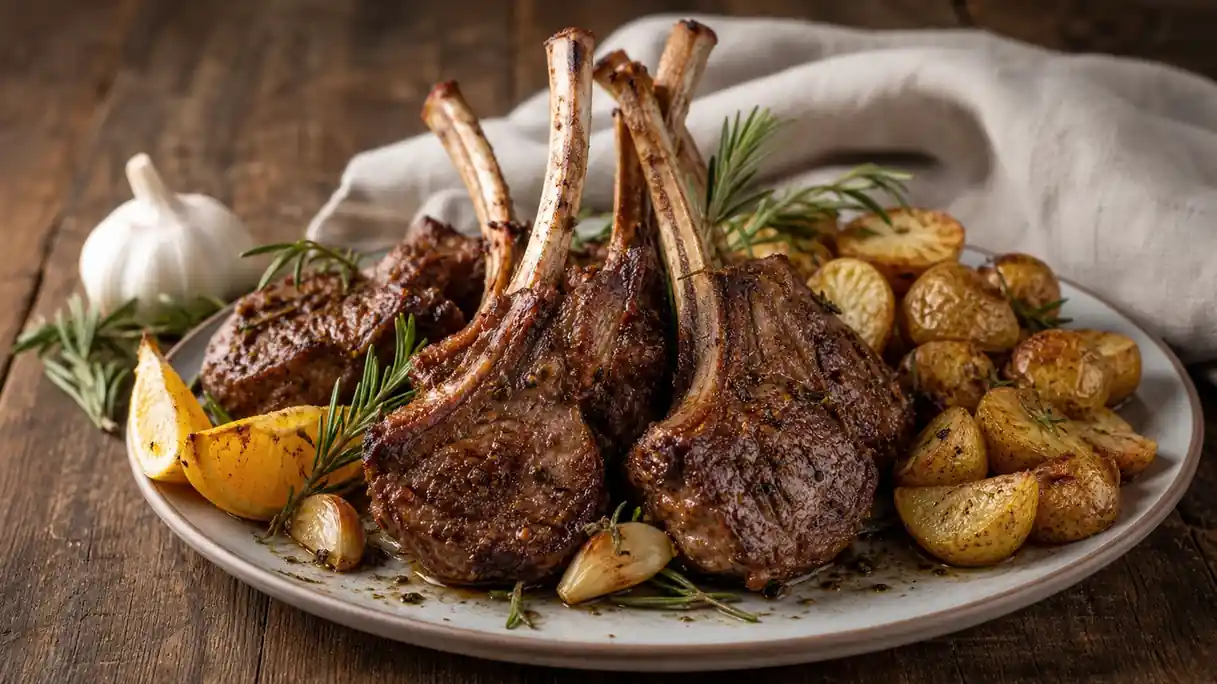
Easy Lamb Lollipops Recipe with Garlic and Rosemary
Make this lamb lollipops recipe with garlic, rosemary, and lemon for tender oven-roasted rib chops, plus crisp potatoes for an easy dinner at home tonight.
Lamb · Prep 15 minutes · Cook 18 minutes
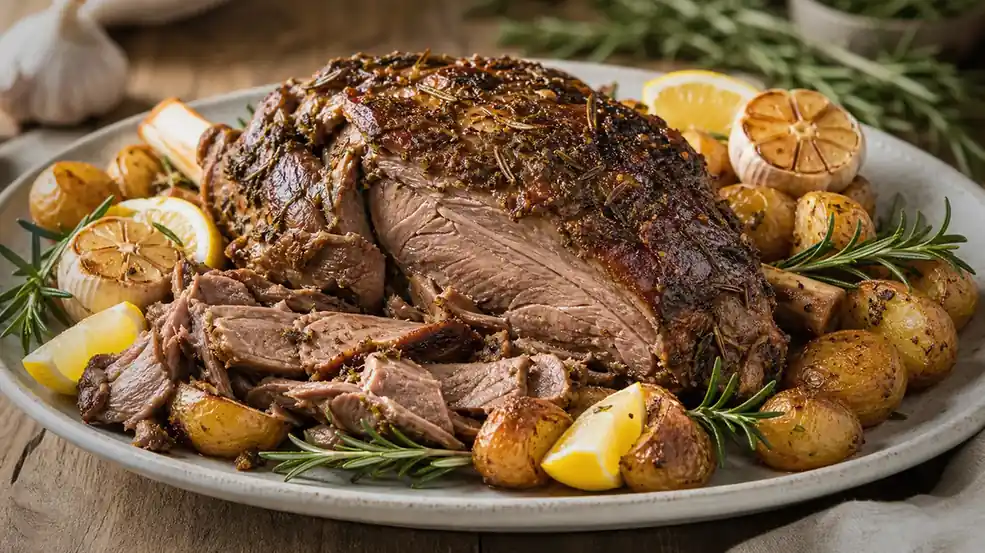
Easy Oven-Roasted Lamb Shoulder Recipes for Dinner
Make tender lamb shoulder recipes with rosemary, garlic, lemon, and roasted vegetables. This easy oven-roast guide delivers a flavorful family dinner.
Lamb · Prep 20 minutes · Cook 2 hours 15 minutes
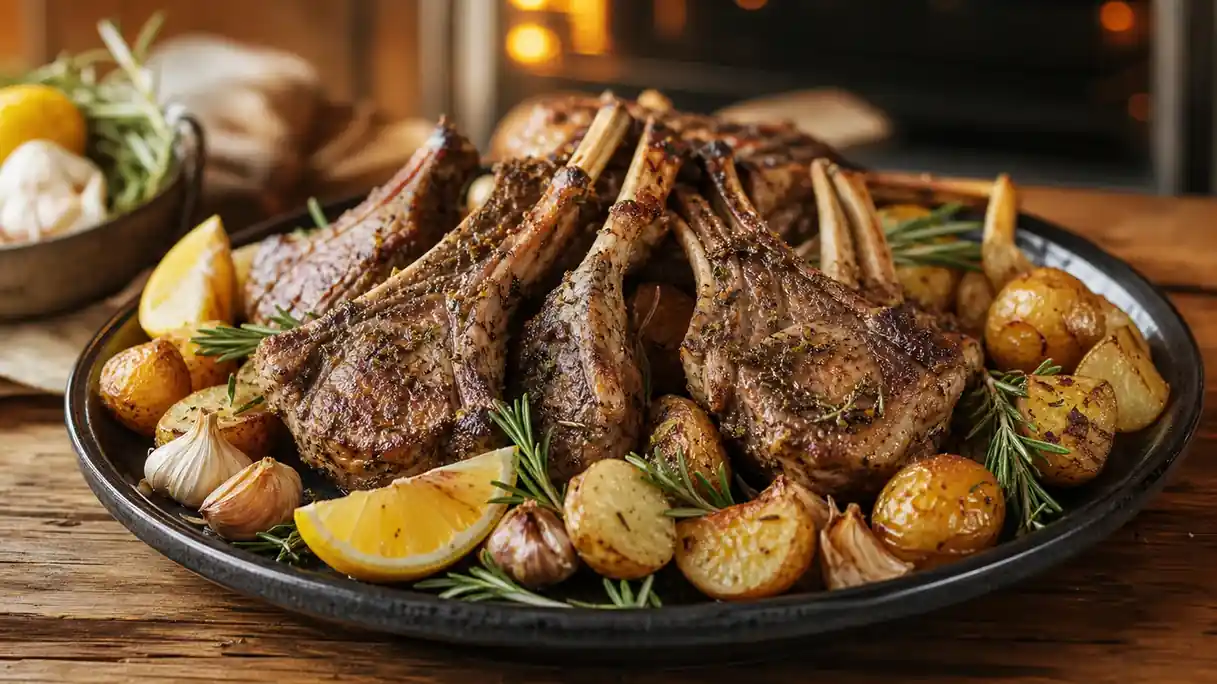
Oven-Baked Lamb Chops Recipes with Garlic and Rosemary
Make lamb chops recipes in the oven with garlic, rosemary, and potatoes for tender, golden chops, with temperature guidance for an easy dinner tonight.
Lamb · Prep 15 minutes · Cook 20 minutes