Chicken Saltimbocca Recipe with Sage and Lemon Pan Sauce
Make this chicken saltimbocca recipe with tender sage chicken cutlets and a bright lemon pan sauce for an easy, elegant 45-minute dinner at home.
Prep
20 minutes
Cook
20 minutes
Rest
5 minutes
Total
45 minutes
Servings
4
Difficulty
Easy
Cut
Boneless skinless chicken breasts
Method
Pan fried
Safe internal temperature
74°C / 165°F
Nutrition per serving
400 calories
- Protein
- 48g
- Fat
- 17g
- Carbs
- 9g
- Fiber
- 1g
- Sat. fat
- 5g
- Sugar
- 1g
- Sodium
- 720mg
Nutrition values are estimates based on the listed ingredients and serving size.
Chicken Saltimbocca Recipe with Sage and Lemon Pan Sauce
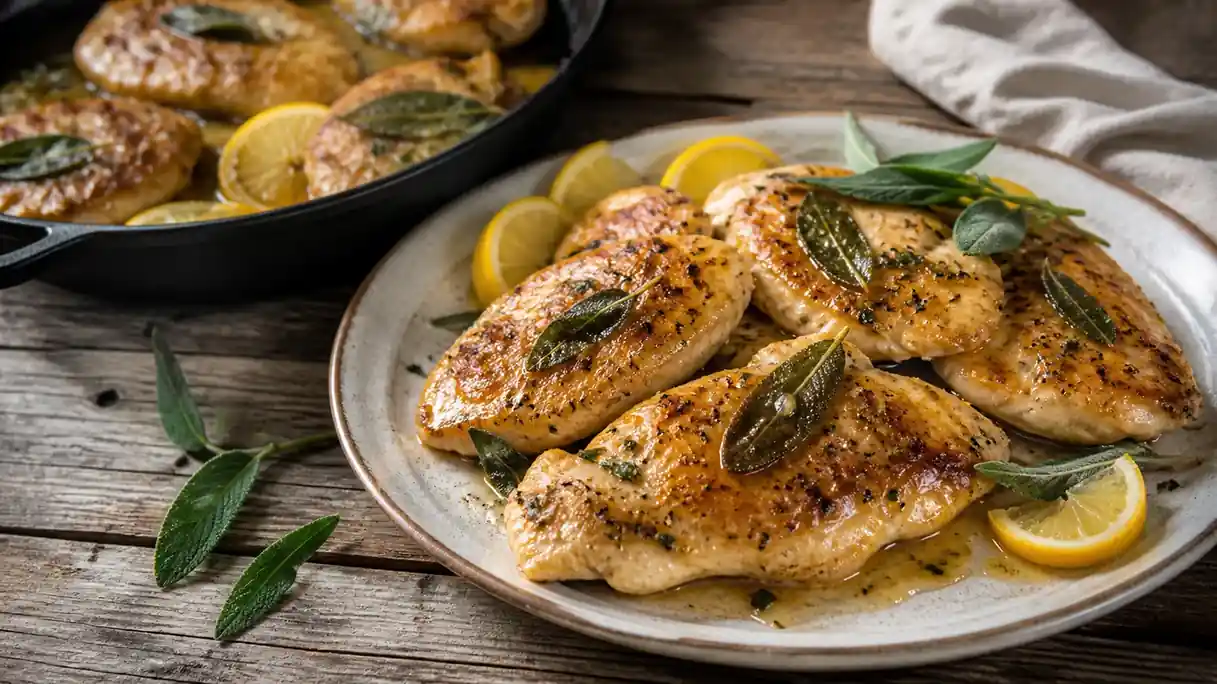
This chicken saltimbocca recipe brings together tender cutlets, fresh sage, and a bright lemon pan sauce in one skillet. The chicken cooks quickly, and the finished dish feels polished enough for company without alcohol or cured pork.
The method is straightforward: flatten the chicken so it cooks evenly, dust it lightly with flour for a golden crust, and make the sauce in the browned bits left in the pan. Keep the heat moderate after searing and the cutlets stay juicy. Serve the skillet dinner with potatoes, rice, or vegetables to catch the sauce.
Why You'll Love This Recipe
- It turns ordinary chicken breasts into a special-looking meal in 45 minutes.
- Fresh sage adds the dish's signature woodsy aroma without taking over.
- The lemon and chicken-broth pan sauce is bright, savory, and quick to make.
- The ingredients are simple and easy to find.
- The cutlets reheat gently for lunch the next day.
If you enjoy fast skillet meals, try these chicken kebabs, or browse more chicken recipes for practical dinner ideas.
Chicken Saltimbocca Recipe Information
- Preparation time: 20 minutes
- Cooking time: 20 minutes
- Resting time: 5 minutes
- Total time: 45 minutes
- Servings: 4
- Internal temperature: 74°C / 165°F in the thickest part of the chicken
Ingredients
For the chicken
- 2 pounds boneless, skinless chicken breasts (about 4 large breasts)
- 1 teaspoon kosher salt
- 3/4 teaspoon black pepper
- 1/2 cup all-purpose flour
- 2 tablespoons olive oil, divided
- 2 tablespoons unsalted butter, divided
- 20 fresh sage leaves, plus a few extra leaves for garnish
For the lemon pan sauce
- 3/4 cup low-sodium chicken broth
- 1/3 cup fresh lemon juice (from 2 lemons)
- 2 garlic cloves, finely grated or minced
- 1 teaspoon lemon zest
- 1 tablespoon cold unsalted butter
- 1 tablespoon chopped flat-leaf parsley, optional
Step-by-Step Instructions
1. Prepare thin chicken cutlets
Pat the chicken breasts dry. Slice each breast horizontally through the middle to make two thin cutlets, giving you eight pieces. Place one piece at a time between sheets of parchment or plastic wrap and gently pound it to an even 1/2-inch thickness. Uniform cutlets are your best protection against dry edges and underdone centers.
Season both sides with the salt and pepper. Spread the flour on a shallow plate and lightly coat each cutlet, shaking off the excess. Keep the coating thin: it helps the chicken brown and gives the sauce a little body, but it should not turn into a heavy crust.
2. Sear the chicken and sage
Heat 1 tablespoon olive oil and 1 tablespoon butter in a large skillet over medium to medium-high heat. When the butter foams, add four sage leaves and place four cutlets on top. Cook for 3 to 4 minutes, until the underside is golden. Turn each piece carefully so the sage stays with the chicken, then cook for another 3 to 4 minutes.
Transfer the browned chicken to a plate. Repeat with the remaining oil, butter, sage, and chicken. If the skillet looks dry before the second batch, add a small extra drizzle of oil. Leave space between the cutlets so they brown instead of steaming.
3. Make the lemon pan sauce
Lower the heat to medium. Add the garlic and stir for about 20 seconds, just until fragrant. Pour in the chicken broth and lemon juice, scraping the skillet with a wooden spoon to loosen the browned bits. Stir in the lemon zest. Simmer for 3 to 5 minutes, until the sauce reduces slightly and tastes concentrated but still fresh.
Remove the skillet from the heat and whisk in the cold tablespoon of butter. It gives the sauce a smooth, shiny finish. Taste and add a small pinch of salt or pepper only if needed; broth brands vary in saltiness.
4. Finish and rest
Return the chicken and any juices on the plate to the skillet. Spoon sauce over the cutlets and simmer gently for 1 to 2 minutes, until an instant-read thermometer registers 74°C / 165°F in the thickest piece. Move the chicken to a serving plate and let it rest for 5 minutes. Spoon over the sauce, garnish with parsley and extra sage, and serve with lemon wedges.
Tips for Best Results
Use fresh sage rather than dried. The leaves become aromatic and lightly crisp in the pan; dried sage is stronger and will not give you the same texture. Keep several leaves aside for garnish so the finished dish looks as fresh as it tastes.
Choose chicken breasts of similar size, or buy cutlets to save a step. A cutlet thicker than 1/2 inch can brown before the center is cooked through. A quick, gentle pound makes the cooking time more predictable.
Let the pan heat before adding the chicken. The flour should sizzle immediately. If it does not, wait another minute. If the butter starts to burn, reduce the heat slightly and add a little oil. Moderate heat gives you a deep golden crust without bitter garlic or scorched sage.
For a silkier sauce, swirl in the cold butter only after taking the skillet off the heat. Boiling after the butter goes in can make the sauce look greasy instead of glossy.
Ingredient Substitutions
Chicken thighs can replace the breasts if you prefer darker meat, though they will need a few extra minutes and should still reach 74°C / 165°F. Pound boneless thighs lightly so they cook evenly.
Use gluten-free all-purpose flour for a gluten-free coating. For a flour-free option, skip the coating and reduce the sauce a little longer; it will be thinner but still flavorful. Vegetable broth can replace chicken broth, but chicken broth gives the sauce a fuller savory base.
If fresh lemons are unavailable, use 2 tablespoons bottled lemon juice and omit the zest. The flavor will be less vivid, so finish with a little extra black pepper. Parsley is optional; chives or a small handful of baby arugula also work as a final garnish.
What to Serve With
This chicken saltimbocca recipe is best with something that can carry the sauce. Try creamy mashed potatoes, buttered egg noodles, couscous, or plain rice. For a lighter plate, pair it with roasted asparagus, green beans, or a crisp lemony salad.
For a complete dinner, add oven-baked chicken thighs to your weekly rotation and save air fryer chicken wings for a casual weekend meal. A basket of warm crusty bread is also welcome for swiping through the lemon pan sauce.
Storage Instructions
Cool the chicken and sauce within 2 hours of cooking. Store them together in a shallow airtight container in the refrigerator for up to 3 days. Keeping the sauce with the chicken helps protect the cutlets from drying out.
For longer storage, freeze cooled chicken with a small amount of sauce in a freezer-safe container for up to 2 months. Thaw overnight in the refrigerator before reheating. Sage may darken after freezing, but the chicken and sauce remain flavorful.
Reheating Instructions
Reheat leftovers gently in a covered skillet over low heat with a splash of broth or water. Turn the chicken once and heat until it reaches 74°C / 165°F. Avoid a hard boil, which can toughen the cutlets and split the butter-based sauce.
A microwave also works for a quick lunch. Cover the chicken loosely, heat at 50 percent power in 45-second intervals, and spoon the sauce over it between intervals. Stop as soon as it is hot throughout.
Frequently Asked Questions
What does saltimbocca mean?
Saltimbocca is an Italian-style preparation known for pairing meat with sage and a savory sauce. This chicken version keeps those defining flavors while using a simple lemon and broth pan sauce.
Can I make the chicken saltimbocca recipe ahead?
You can slice, pound, season, and flour the chicken up to 8 hours ahead. Refrigerate it in a covered container with parchment between layers. Make the sauce just before serving for the freshest flavor and best texture.
Why is my chicken dry?
Most often, the cutlets were uneven or cooked too long. Pound them to the same thickness and check the temperature early. Remove them at 74°C / 165°F, then let them rest while the sauce settles.
Is the sauce supposed to be thick?
It should lightly coat a spoon, not become a heavy gravy. The flour from the chicken and the final butter give it a little body. If it reduces too much, whisk in a tablespoon or two of broth.
Can I double the recipe?
Yes. Brown the chicken in batches and hold the finished pieces loosely covered on a plate. Build one larger batch of sauce in the skillet, then return all of the chicken briefly to warm through.
Conclusion
This chicken saltimbocca recipe makes an elegant skillet dinner feel manageable. Evenly thin chicken, aromatic sage, and a quick lemon pan sauce deliver plenty of restaurant-style flavor in under an hour. Keep the heat steady, verify that the chicken reaches 74°C / 165°F, and serve the cutlets while the sauce is still glossy and bright.
Keep cooking
You might also like

Recipes with Ground Chicken: Easy Skillet Meatballs
Make recipes with ground chicken with juicy skillet meatballs, lemon-herb couscous, and cooling yogurt sauce for an easy, satisfying weeknight dinner.
Chicken · Prep 20 minutes · Cook 18 minutes

Easy Boursin Chicken Recipe with Creamy Spinach Sauce
This Boursin chicken recipe pairs golden skillet chicken with a creamy garlic-herb sauce and spinach for an easy, comforting 50-minute dinner at home.
Chicken · Prep 20 minutes · Cook 25 minutes
Crispy Oven-Baked Chicken Wing Recipes for Easy Dinners
Make crispy oven-baked chicken wing recipes with a simple spice rub, juicy meat, reliable timing, and serving ideas for an easy shareable dinner.
Chicken · Prep 15 minutes · Cook 45 minutes