Beef Tongue Recipe: Tender Braised Beef Tongue Dinner
Make this beef tongue recipe with tender, gently braised beef, aromatic vegetables, potatoes, and a glossy pan sauce for a comforting make-ahead dinner.
Prep
25 minutes
Cook
3 hours
Rest
15 minutes
Total
3 hours 40 minutes
Servings
6
Difficulty
Medium
Cut
Whole beef tongue
Method
Stovetop braised
Safe internal temperature
71°C / 160°F
Nutrition per serving
428 calories
- Protein
- 32g
- Fat
- 28g
- Carbs
- 10g
- Fiber
- 2g
- Sat. fat
- 10g
- Sugar
- 5g
- Sodium
- 610mg
Nutrition values are estimates based on the listed ingredients and serving size.
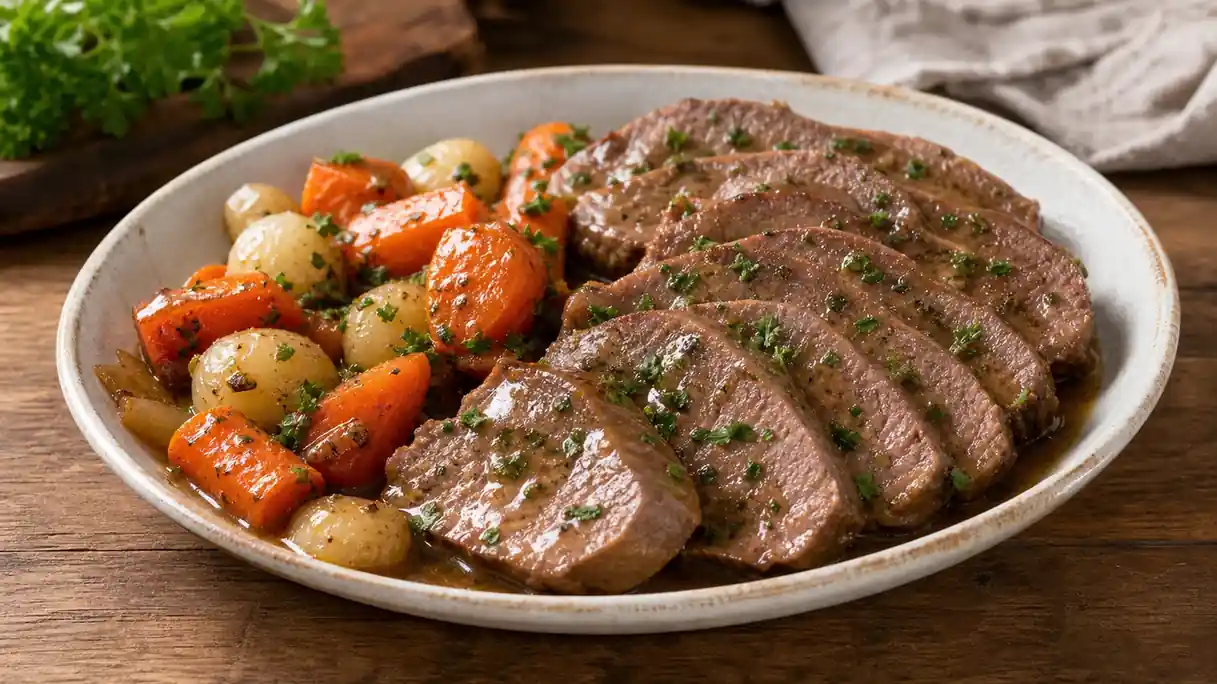
A beef tongue recipe takes time, but the work is mostly hands-off. The tongue gently braises with onion, carrot, celery, garlic, and warm spices until a thin knife slips into the thickest part. After a short rest, the outer skin peels away, leaving tender meat to slice and serve with a light pan sauce.
Serve it with the braising vegetables and potatoes, tuck the slices into warm flatbreads, or save some for sandwiches the next day. The meat has a rich beef flavor and a soft, almost silky texture, and the broth gives you a useful head start on the sauce.
Why You'll Love This Recipe
- Once the pot reaches a gentle simmer, the Dutch oven does most of the work.
- The braising liquid both tenderizes the tongue and becomes the base for the sauce.
- Six generous servings make this a good make-ahead dinner; the flavor improves overnight.
- Carrots, celery, onions, and potatoes cook in the same pot, so the meal stays simple.
- Thinly sliced leftovers work well in grain bowls, wraps, and sandwiches.
Beef Tongue Recipe Information
| Detail | Amount |
|---|---|
| Preparation time | 25 minutes |
| Cooking time | 3 hours |
| Resting time | 15 minutes |
| Total time | 3 hours 40 minutes |
| Servings | 6 |
| Internal temperature | 71°C / 160°F, then braise until fork-tender |
The listed temperature is a useful safety checkpoint, but this cut is finished when it is tender. Start checking near the three-hour mark. A thin knife should enter the thickest part with little resistance. If the tongue is still firm, keep the liquid at a gentle simmer and check again every 15 minutes.
Ingredients
- 1 whole beef tongue, about 3 pounds (1.35 kg), rinsed
- 2 teaspoons fine salt, divided
- 1 teaspoon black pepper, divided
- 1 tablespoon neutral oil
- 1 large yellow onion, cut into wedges
- 2 medium carrots, cut into 1-inch pieces
- 2 celery stalks, cut into 1-inch pieces
- 5 garlic cloves, lightly crushed
- 2 bay leaves
- 1 teaspoon ground cumin
- 1 teaspoon sweet paprika
- 6 cups low-sodium beef broth
- 1 cup water, plus more as needed
- 1 pound baby potatoes, halved if large
- 1 tablespoon cornstarch mixed with 2 tablespoons cold water, optional
- 2 tablespoons chopped fresh parsley
Choose a tongue that fits comfortably in your Dutch oven and sits mostly below the liquid. Low-sodium broth leaves you room to adjust the seasoning as the liquid reduces. The cornstarch slurry is optional, but it gives the broth a light, glossy texture that clings to the sliced meat.
Step-by-Step Instructions
1. Season and brown the tongue
Pat the beef tongue dry, then season it with 1 teaspoon salt and 1/2 teaspoon pepper. Heat the oil in a large Dutch oven over medium-high heat. Brown the tongue for 3 to 4 minutes per side, including the curved edges, until it has good color. Transfer it to a plate. Browning is optional, but it gives the broth a fuller roasted flavor.
2. Build the braising liquid
Lower the heat to medium and add the onion, carrots, celery, and garlic. Cook for 4 to 5 minutes, stirring occasionally, until the onion starts to soften. Add the bay leaves, cumin, paprika, remaining salt, and remaining pepper. Pour in the beef broth and water, scraping up the browned bits from the bottom of the pot.
3. Braise gently until tender
Return the tongue and any juices to the pot. The liquid should reach at least two-thirds of the way up the meat, so add water if needed. Bring it just to a simmer, cover, and reduce the heat to low. Cook for about 2 hours 30 minutes, turning the tongue once halfway through. Keep the liquid at a quiet bubble rather than a hard boil so the meat has time to soften.
4. Add the potatoes and finish cooking
Add the potatoes, cover the pot again, and cook for 30 to 45 minutes more. The potatoes should be tender, and the tongue should reach at least 71°C / 160°F. A knife should also slide easily into the thickest part. Transfer the tongue to a rimmed cutting board and let it rest for 15 minutes. Keep the vegetables and cooking liquid for serving.
5. Peel and slice
When the tongue is warm enough to handle but no longer hot, make a shallow slit in the outer skin and pull it away with a small knife. Trim away any tough cartilage or fatty tissue at the thick base. Slice the peeled tongue across the grain into 1/4-inch pieces. Take your time here: the skin comes off much more easily while the meat is warm.
6. Make a quick pan sauce and serve
Skim excess fat from the broth. For a slightly thicker sauce, bring 2 cups of strained braising liquid to a simmer and whisk in the cornstarch slurry. Cook for 1 minute, until glossy. Arrange the tongue slices with the potatoes and vegetables, spoon the sauce over everything, and finish with parsley.
Tips for Best Results
Keep the heat low once the pot is covered. A rolling boil can cloud the cooking liquid and may make the meat tighten before it softens. If your lid lets out a lot of steam, check the pot every 45 minutes and add hot water as needed to keep the tongue mostly submerged.
Give the tongue a short rest before peeling, but do not let it cool completely. If it becomes difficult to handle, return it to hot broth for a few minutes. For neater slices, chill the peeled tongue in a little broth for 30 minutes, then slice it and rewarm it in the sauce.
Ingredient Substitutions
Beef stock or chicken stock can replace the beef broth; choose one with a clean, savory flavor and adjust the salt at the end. Replace one of the carrots with parsnips, or use small turnips instead of the potatoes. For a brighter finish, stir a teaspoon of lemon juice into the finished sauce, then taste before adding more.
Ground coriander is a good substitute for cumin, although it brings a more citrusy aroma. Skip the cornstarch for a brothy sauce, or reduce the strained liquid a little longer for a naturally fuller one. Wait to add acidic ingredients until the tongue is tender, since a long acidic braise can slow the softening process.
What to Serve With Beef Tongue
The potatoes and vegetables make this beef tongue recipe a full meal, but a fresh side helps balance its richness. Try roasted vegetable ideas, a crisp cucumber salad, or steamed green beans with lemon. Warm flatbreads and herbed yogurt sauce are also good with the sliced tongue.
For a larger spread, serve it with rice pilaf or creamy mashed potatoes to catch the pan sauce. Browse more beef recipes for complementary mains, or put chilled slices in a sandwich with sharp, crunchy slaw.
Storage Instructions
Cool the sliced tongue, vegetables, and sauce within 2 hours of cooking. Store them in a covered container with enough sauce to keep the slices moist. Refrigerate for up to 4 days. For longer storage, freeze portions in sauce for up to 2 months, leaving a little space in the container for expansion.
The flavor deepens overnight, which makes this a useful make-ahead dinner. Label frozen portions with the date and thaw them in the refrigerator overnight before reheating. Do not leave cooked beef at room temperature for extended periods.
Reheating Instructions
Place the slices and sauce in a covered skillet over low heat. Add a splash of broth or water if the sauce has thickened, then heat gently until the beef reaches 74°C / 165°F. Avoid a hard boil, which can dry the slices. For a single portion, use a covered microwave-safe bowl at medium power and stir the sauce once halfway through.
Reheat the potatoes and vegetables alongside the beef, or warm them separately if you want to keep the slices intact. Reheat only the portion you plan to eat, and discard leftovers that have been reheated and held at room temperature.
Frequently Asked Questions
Does beef tongue need to be peeled?
Yes. The thick outer skin is easier to remove after the tongue has braised and rested. Removing it gives the finished slices their tender texture. Trim the firmer connective tissue near the base as well.
How do I know when beef tongue is tender?
The meat should be well past the minimum safety temperature and yield easily when pierced with a thin knife. Depending on its size and age, it may need an extra 15 to 45 minutes beyond the stated cook time. Add time instead of increasing the heat.
Can I make this recipe ahead?
Yes. Cool the peeled tongue in some strained broth, then refrigerate it overnight. Slice it cold for tidy pieces and warm the slices gently in sauce before serving.
What are the nutrition estimates per serving?
Each serving is estimated at 428 calories, 32g protein, 28g fat, 10g saturated fat, 10g carbohydrates, 2g fiber, 5g sugar, and 610mg sodium. The estimate includes the tongue, vegetables, potatoes, and a portion of sauce; actual values vary with the tongue's trimming and the broth brand.
Conclusion
This beef tongue recipe rewards steady heat with tender slices and a deeply savory broth-based sauce. Brown the tongue, keep the braise calm, and peel it while warm for the best texture. It makes a relaxed weekend dinner and leaves you with easy lunches for the week. For another patient, satisfying meal, explore slow-cooked beef recipes.
Keep cooking
You might also like
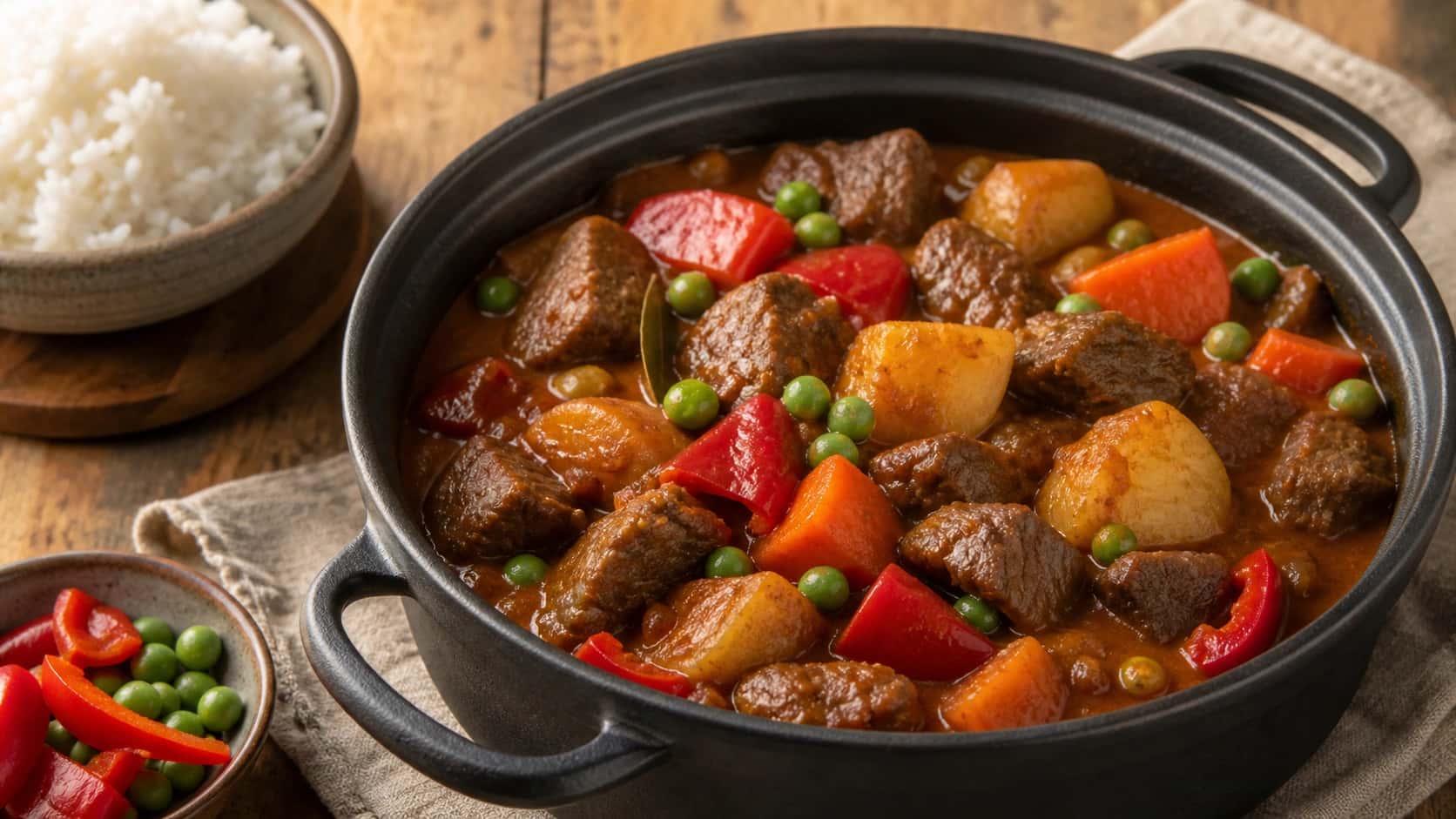
Beef Caldereta Recipe: Easy Filipino Beef Stew Dinner
This beef caldereta recipe braises tender chuck with potatoes, peppers, carrots, and olives in a rich tomato sauce for an easy, comforting family dinner.
Beef · Prep 20 minutes · Cook 2 hours 20 minutes
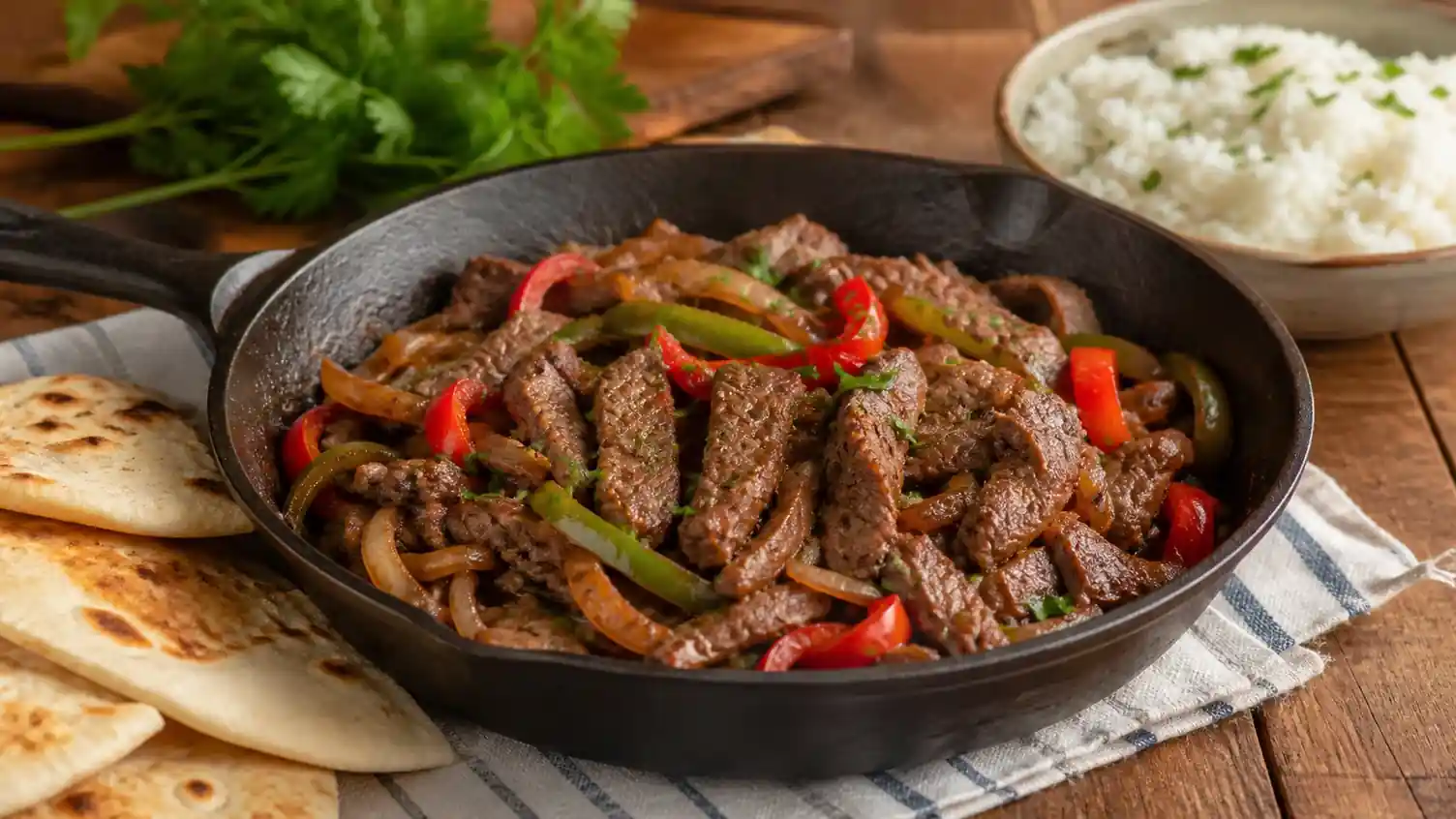
Shaved Beef Recipes: Easy Skillet Beef and Peppers
Make shaved beef recipes at home with tender sirloin, sweet peppers, and onions in a fast, savory skillet dinner for weeknights, ready in just 32 minutes.
Beef · Prep 15 minutes · Cook 12 minutes
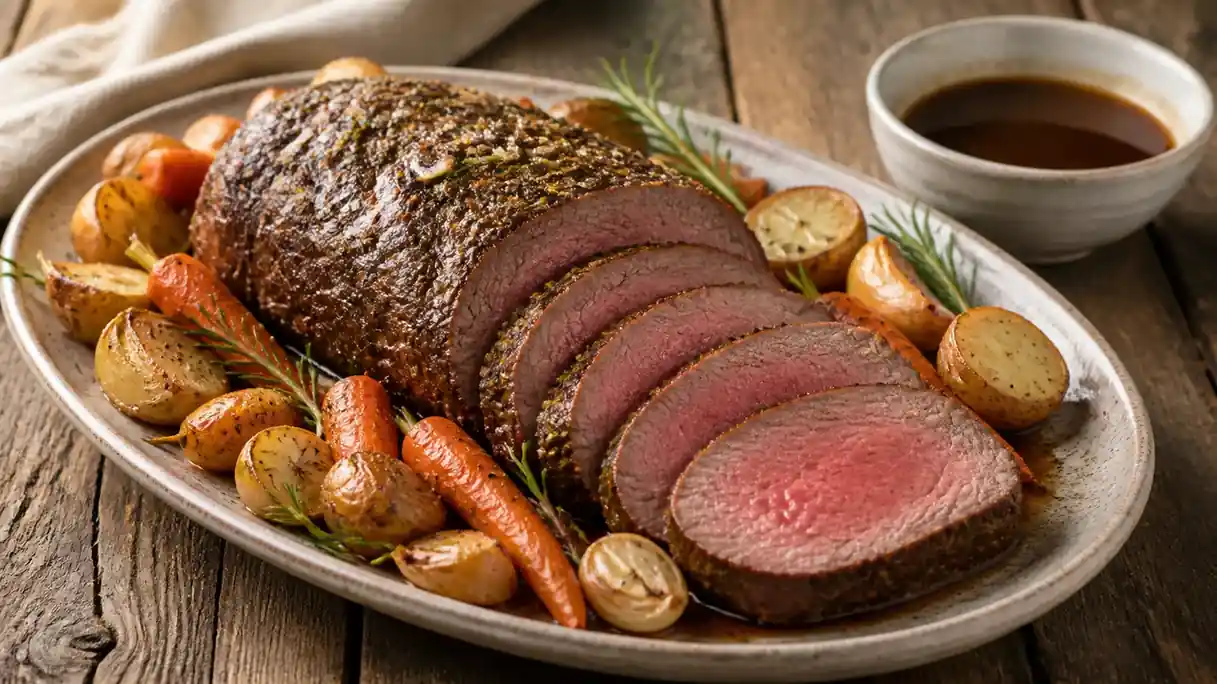
Recipes for Beef Eye of Round: Tender Oven Roast
Make recipes for beef eye of round with this tender oven roast, savory herb rub, simple pan jus, and practical slicing tips for a satisfying dinner tonight.
Beef · Prep 20 minutes · Cook 1 hour 15 minutes