Turkey Bone Broth Recipe: Rich, Clear, and Homemade
This turkey bone broth recipe turns roasted turkey bones, vegetables, and herbs into a rich, clear homemade broth for soups, grains, and sipping all week.
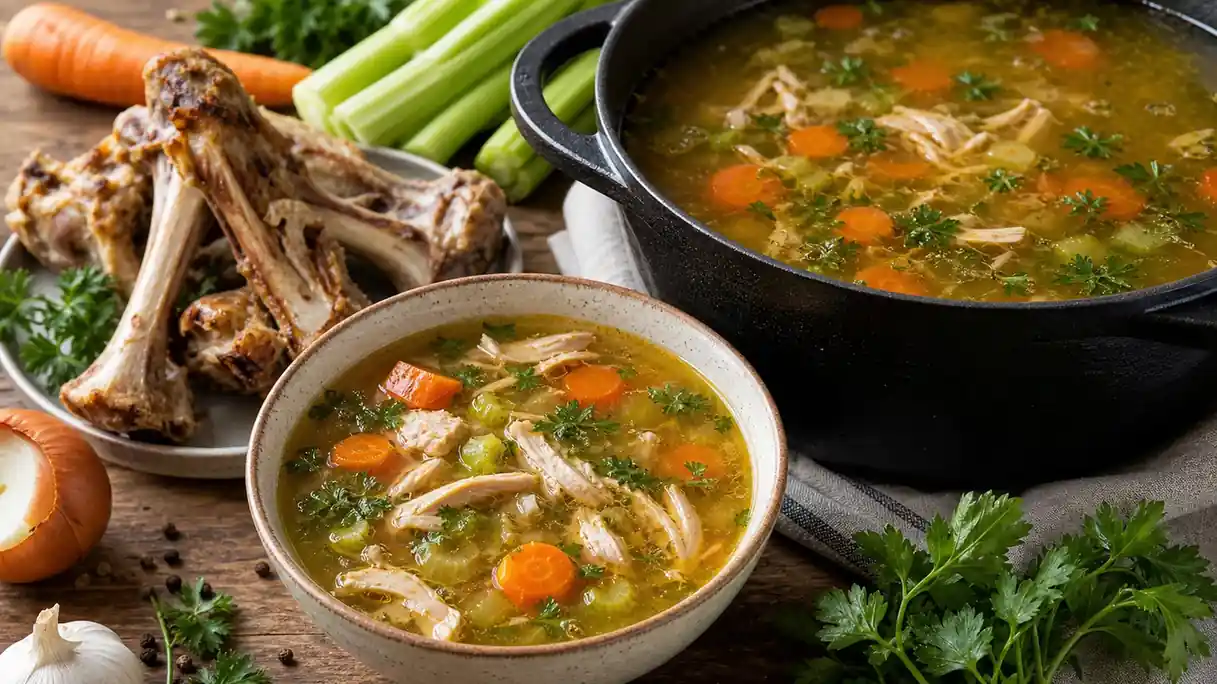
Prep
15 minutes
Cook
3 hours
Rest
15 minutes
Total
3 hours 30 minutes
Servings
4
Difficulty
Easy
Cut
Roasted turkey bones with leftover meat
Method
Slow simmered
Safe internal temperature
74°C / 165°F
Nutrition per serving
170 calories
- Protein
- 20g
- Fat
- 7g
- Carbs
- 8g
- Fiber
- 2g
- Sat. fat
- 2g
- Sugar
- 4g
- Sodium
- 310mg
Nutrition values are estimates based on the listed ingredients and serving size.
After a roast turkey dinner, the carcass still has plenty to give. This turkey bone broth recipe turns it, along with a few vegetables and herbs, into a clear, deeply savory broth with very little hands-on work. The remaining turkey meat simmers until it is tender enough to pull from the bones, making this a useful way to stretch leftovers or use cooked turkey bones from the freezer.
The important part is keeping the heat gentle. A lazy simmer and careful straining produce a clean, golden base for soup, rice, gravy, or a warm mug of broth. This recipe makes four generous servings with tender shreds of turkey, and it is easy to scale up for a larger stockpot.
Why You'll Love This Recipe
- It turns roasted turkey bones and small scraps of meat into another useful meal.
- A gentle simmer gives you clear, savory broth without a complicated technique.
- The vegetables and herbs round out the flavor without overpowering the turkey.
- You can serve it right away or freeze it in measured portions.
- The aromatics are flexible, so you can work with what you have on hand.
Turkey Bone Broth Recipe Information
| Detail | Amount |
|---|---|
| Preparation time | 15 minutes |
| Cooking time | 3 hours |
| Resting time | 15 minutes |
| Total time | 3 hours 30 minutes |
| Servings | 4 |
| Safe internal temperature | 74°C / 165°F |
If you are starting with a freshly roasted turkey, refrigerate the bones and any meat you plan to save within two hours. When you reheat the strained broth with the reserved turkey meat, bring it to 74°C / 165°F before serving. A thermometer is the most reliable way to check.
Ingredients
- 1 roasted turkey carcass with about 450 g / 1 pound of meat still attached, broken into pieces if needed
- 2 medium carrots, cut into 5 cm / 2-inch pieces
- 2 celery stalks, cut into 5 cm / 2-inch pieces
- 1 large yellow onion, quartered (leave the skin on for color)
- 4 garlic cloves, lightly crushed
- 2 bay leaves
- 6 sprigs fresh parsley
- 4 sprigs fresh thyme, or 1 teaspoon dried thyme
- 1 teaspoon whole black peppercorns
- 2 1/2 litres / 10 cups cold water, plus more if needed
- 1 teaspoon fine sea salt, plus more to taste after straining
- 1 tablespoon fresh lemon juice, optional
Use roasted rather than raw bones for the fullest flavor. If the carcass is in large pieces, ask an adult to help break it into sections that fit the stockpot, using sturdy kitchen shears or a heavy knife. Go easy on the salt at the beginning; the broth reduces slightly and is easier to season after straining.
Step-by-Step Instructions
1. Fill the stockpot
Place the turkey bones and any attached meat in a large stockpot or Dutch oven. Add the carrots, celery, onion, garlic, bay leaves, parsley, thyme, and peppercorns, then pour in the cold water. The bones should be mostly covered. Add a little more water only if they sit well above the surface.
2. Bring it gently to a simmer
Set the pot over medium heat. When small bubbles begin to rise around the edge, lower the heat. During the first 15 minutes, skim away any foam that collects on top. A vigorous boil can cloud the broth and dull the vegetables, so look for an occasional small bubble rather than constant movement.
3. Simmer the turkey bone broth
Cover the pot slightly ajar and simmer gently for 3 hours. Check it once or twice to make sure the bones remain mostly submerged and the heat stays low. If the liquid drops substantially, add hot water rather than cold so the simmer does not stop. Avoid stirring to help keep the finished turkey bone broth clear.
4. Separate the meat and strain
Turn off the heat and let the pot stand for 15 minutes. Lift out the large bones with tongs and set them on a tray to cool slightly. Pick off any usable turkey meat, discarding the skin, cartilage, and bones. Pour the broth through a fine-mesh strainer into a clean pot or heat-safe bowl. For an especially clear broth, line the strainer with clean cheesecloth.
5. Season and serve
Stir the salt into the strained broth and taste. Add the lemon juice for a brighter finish if you like, then return the picked turkey meat to the broth. Warm it gently until the meat reaches 74°C / 165°F, then ladle it into bowls. If you plan to use the broth in another recipe, leave it plain.
Tips for Best Results
Choose a pot that gives the bones room without requiring excessive water. A crowded pot makes stronger broth, while a very large pot can leave the flavor thin. If the turkey carcass was heavily seasoned or brined, wait until the end to add salt and taste before using the full amount.
Keep the simmer calm: the broth should occasionally tremble, not roll. That gives the vegetables time to add sweetness while helping the broth stay clear. For a slightly richer result, chill the strained broth overnight, lift off the firm fat cap, and reheat it the next day.
Strain carefully and discard all cooked bones. Never give cooked poultry bones to pets because they can splinter. Cool leftover broth promptly in shallow containers so it moves through the temperature danger zone quickly.
Ingredient Substitutions
Use parsnip in place of one carrot for a sweeter note, or replace the parsley and thyme with a small sprig of rosemary. Leek tops are useful when you have them, but wash them thoroughly because grit can hide between the layers.
If you do not have a whole turkey carcass, use 1.4 kg / 3 pounds of roasted turkey wings, necks, or backs. Chicken bones can replace part of the turkey bones in a pinch, although the finished broth will taste less distinctly of turkey. Do not add bouillon at the beginning; it can make the broth too salty as it reduces.
What to Serve With
Serve a warm bowl with a squeeze of lemon, chopped parsley, and warm flatbread for a light meal. The broth is also a good base for turkey rice soup, and the picked turkey works well in easy turkey recipes.
For a fuller dinner, add cooked rice or small pasta, fresh spinach, and a handful of shredded turkey. Pair it with a crisp cucumber salad or roasted vegetables. If you have extra turkey meat, turkey tenderloin recipes offer another simple weeknight option, while weeknight dinner ideas can help round out the menu.
Storage Instructions
Cool the strained broth for no more than 2 hours, then transfer it to shallow airtight containers and refrigerate for up to 4 days. When possible, keep the meat separate so it stays in better shape for soup or sandwiches. Label the containers with the date, especially if you are freezing several batches.
For longer storage, freeze the cooled broth in freezer-safe containers or ice-cube trays for up to 3 months. Leave a little headspace because liquid expands as it freezes. Thaw it overnight in the refrigerator, not on the counter.
Reheating Instructions
Reheat refrigerated turkey bone broth in a saucepan over medium-low heat until steaming and the turkey meat reaches 74°C / 165°F. For one serving, microwave it in a covered, microwave-safe bowl in 60-second intervals, stirring between intervals. Add a splash of water if the broth has reduced during storage.
Only reheat the amount you plan to use. Once a portion has been reheated, do not cool and reheat that same portion again. If the broth is frozen, thaw it in the refrigerator before warming it whenever possible.
Frequently Asked Questions
Can I make turkey bone broth recipe from a frozen carcass?
Yes. Thaw the cooked turkey carcass in the refrigerator first, then follow the recipe as written. You can also freeze the bones in a sealed bag until you have time to make broth. Avoid thawing cooked poultry on the counter.
Why is my broth cloudy?
Cloudiness usually comes from boiling too hard or stirring the pot too often. The broth is still safe and tasty if it was handled and chilled properly. For a clearer result next time, keep the liquid at a gentle simmer and strain it through cheesecloth.
Can I cook the broth longer?
Yes, you can simmer it for up to 5 hours if the liquid level remains adequate and the heat stays low. Three hours is a dependable balance of flavor and convenience for a roasted turkey carcass. Taste before extending the cook time; the broth may already be rich enough.
Are the nutrition values exact?
No. The nutrition values are per-serving estimates based on four servings, 450 g / 1 pound of picked turkey meat, the vegetables, and the listed seasonings. They will vary with how much meat remains on the bones and how much fat is skimmed from the broth.
Conclusion
This turkey bone broth recipe makes good use of a roasted turkey carcass with a few vegetables, a low simmer, and careful straining. Serve it as a warm bowl of broth or use it as a flavorful base for soups and grains. Keep turkey bones in the freezer, and you will have the makings of another homemade meal whenever you need one.
Keep cooking
You might also like

Healthy Turkey Chili Recipe for a Hearty Weeknight Dinner
This healthy turkey chili recipe combines lean ground turkey, beans, vegetables, and warming spices for a hearty, easy one-pot dinner everyone will enjoy.
Turkey · Prep PT15M · Cook PT35M

Turkey Lasagna Recipe: Easy Ground Turkey Family Dinner
Make this turkey lasagna recipe with savory ground turkey, tender noodles, tomato sauce, and creamy cheese for a hearty, easy baked family dinner.
Turkey · Prep 25 minutes · Cook 45 minutes

Turkey Sandwich Recipe: Crispy, Juicy Homemade Lunch
This turkey sandwich recipe layers juicy skillet turkey, crisp vegetables, and a bright herb spread on toasted bread for an easy, satisfying lunch.
Turkey · Prep 20 minutes · Cook 14 minutes