French Chicken Recipes: Creamy Dijon Braised Thighs
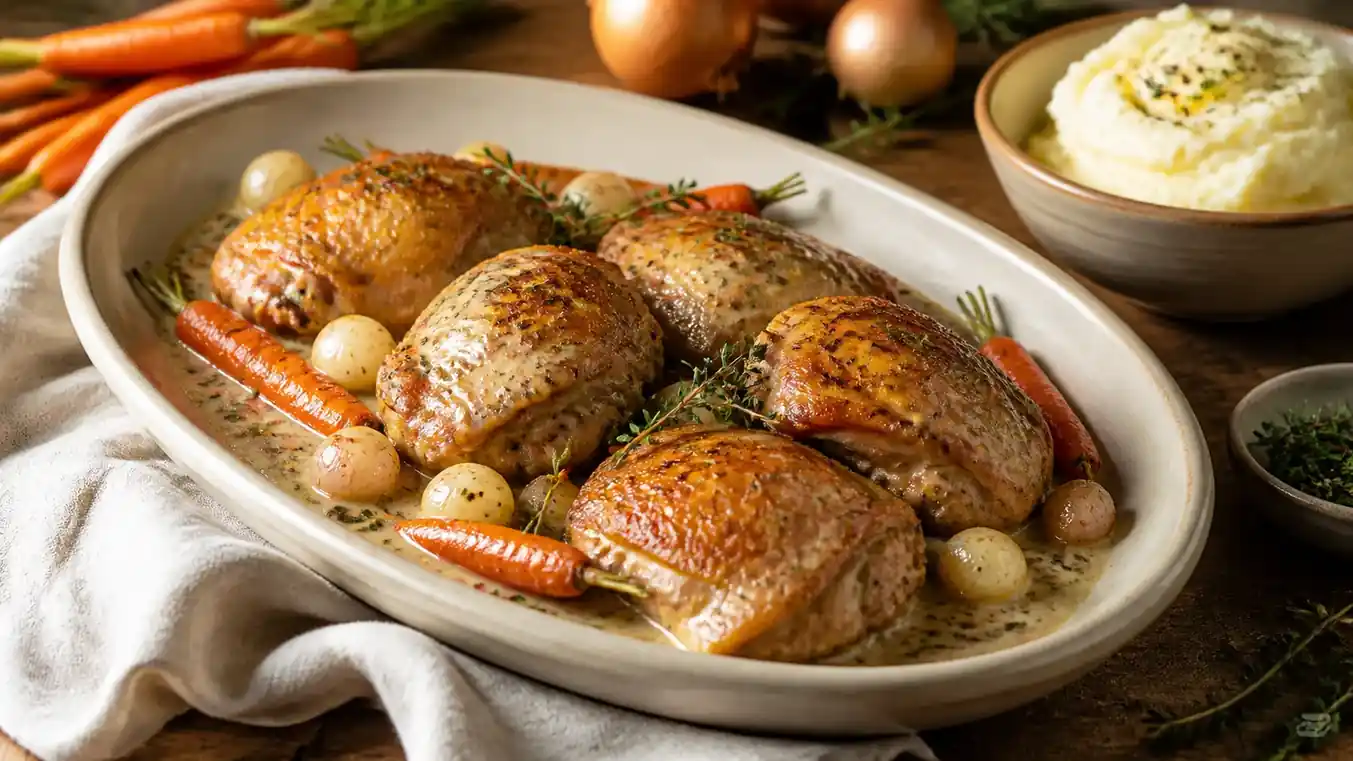
French chicken recipes get weeknight-friendly with tender Dijon-herb braised thighs, carrots, and onions in a creamy pan sauce for a cozy, bistro-style dinner.
Prep
20 minutes
Cook
35 minutes
Rest
5 minutes
Total
1 hour
Servings
6
Difficulty
Easy
Cut
Bone-in chicken thighs
Method
Skillet braised
Safe internal temperature
74°C / 165°F
Nutrition per serving
475 calories
- Protein
- 53g
- Fat
- 30g
- Carbs
- 16g
- Fiber
- 3g
- Sat. fat
- 9g
- Sugar
- 4g
- Sodium
- 760mg
Nutrition values are estimates based on the listed ingredients and serving size.
French Chicken Recipes: Creamy Dijon Braised Thighs
These French chicken recipes are made for a cozy dinner that still fits a weeknight. Bone-in chicken thighs brown in one skillet, then braise with carrots, pearl onions, Dijon mustard, herbs, and cream. You get tender chicken and a silky pan sauce without turning dinner into an all-day project.
Browning the thighs first gives the sauce a deeper flavor. After that, keep the heat low and the simmer calm so the chicken stays tender. Serve it over mashed potatoes, buttered noodles, rice, or crusty bread—anything that can catch the Dijon-herb sauce.
Why You'll Love This Recipe
- Everything cooks in one large, oven-safe skillet or Dutch oven.
- A gentle braise keeps chicken thighs juicy, and they are forgiving if you are still getting comfortable with cooking chicken.
- Carrots and pearl onions add color and make the sauce feel like part of a complete dinner.
- Dijon, thyme, and garlic bring bistro-style flavor without specialty ingredients.
- Leftovers reheat well for an easy next-day lunch.
Recipe Information
| Detail | Value |
|---|---|
| Preparation time | 20 minutes |
| Cooking time | 35 minutes |
| Resting time | 5 minutes |
| Total time | 1 hour |
| Servings | 6 |
| Safe internal temperature | 74°C / 165°F |
Ingredients
For the chicken and vegetables
- 6 bone-in, skin-on chicken thighs, about 2 1/2 pounds (1.1 kg)
- 1 1/2 teaspoons kosher salt, divided
- 1/2 teaspoon freshly ground black pepper
- 1 tablespoon olive oil
- 12 ounces (340 g) small carrots, scrubbed and halved lengthwise if thick
- 8 ounces (225 g) peeled pearl onions, fresh or thawed frozen
- 3 garlic cloves, finely minced
- 1 tablespoon fresh thyme leaves, plus a few sprigs for the pan
For the Dijon-herb sauce
- 1 1/2 tablespoons all-purpose flour
- 2 cups (480 ml) low-sodium chicken broth
- 2 tablespoons Dijon mustard
- 1 tablespoon whole-grain mustard
- 3/4 cup (180 ml) heavy cream
- 1 tablespoon lemon juice
- 2 tablespoons chopped flat-leaf parsley
Step-by-Step Instructions for French Chicken Recipes
1. Season and dry the chicken
Pat the chicken thighs very dry with paper towels; dry skin browns instead of steaming. Season both sides with 1 teaspoon of the salt and all of the pepper. Let the chicken sit at room temperature for 15 to 20 minutes while you prepare the carrots, onions, garlic, and herbs.
2. Brown the thighs
Set a large, deep skillet or Dutch oven over medium heat and add the olive oil. Place the chicken skin-side down in a single layer. Cook it without moving for 8 to 10 minutes, until the skin is deep golden brown and releases easily. Turn the thighs and cook the second side for 3 minutes, then transfer them to a plate. They will finish cooking in the sauce.
If the pan is crowded, brown the chicken in two batches. Too many thighs at once lower the pan temperature and make it harder to build the browned bits that give the sauce its depth.
3. Soften the vegetables
Carefully spoon off all but about 1 tablespoon of the rendered fat. Add the carrots and pearl onions with the remaining 1/2 teaspoon salt. Cook for 5 minutes, stirring occasionally, until the vegetables take on a little color. Add the garlic and thyme leaves and stir for 30 seconds, just until fragrant.
4. Build the sauce
Sprinkle the flour over the vegetables and stir for 1 minute to cook off its raw taste. Slowly pour in the chicken broth, scraping the bottom of the skillet with a wooden spoon as you go. Whisk in both mustards. Bring the liquid to a gentle simmer. It should be lightly thickened, not as thick as gravy.
5. Braise until safely cooked
Return the chicken to the skillet, skin-side up, nestling it among the vegetables. Keep the skin above the liquid as much as possible. Add the thyme sprigs, cover the skillet partially, and reduce the heat to medium-low. Simmer gently for 22 to 25 minutes.
Check the thickest part of a thigh, avoiding the bone, with an instant-read thermometer. The chicken is ready at 74°C / 165°F. If the sauce is bubbling aggressively, lower the heat; a calm simmer helps keep the meat tender.
6. Finish and rest
Move the chicken to a clean plate and let it rest for 5 minutes. Remove the thyme sprigs from the skillet. Stir the cream into the sauce and simmer for 2 to 3 minutes, until glossy. Turn off the heat, then stir in the lemon juice and parsley. Taste and add a small pinch of salt or pepper if needed. Spoon the vegetables and sauce over the chicken to serve.
Tips for Best Results
Use thighs with skin and bone for the best flavor and a little protection from overcooking. Boneless thighs work too, but start checking them after 14 minutes of simmering because they cook faster.
Keep the cream out until the chicken is cooked. Adding it at the end keeps the sauce smooth and prevents it from reducing too far while the thighs braise. For a lighter finish, use half-and-half, but simmer it gently and do not let it boil hard.
An instant-read thermometer is more reliable than timing alone because thighs can vary in size. It also makes the food-safety check straightforward. Transfer cooked chicken to a clean plate; do not return it to the plate that held the raw chicken.
For another skillet dinner, try chicken liver recipes. You can also browse more chicken recipes for reliable weeknight ideas.
Ingredient Substitutions
Boneless, skinless chicken thighs can replace the bone-in thighs. Brown them for about 4 to 5 minutes per side, then simmer until they reach 74°C / 165°F. Chicken breasts are also possible, but they are leaner. Use smaller breasts or cut large ones in half horizontally, and check them early.
Thickly wedged shallots can replace the pearl onions. Baby potatoes are a hearty substitute for the carrots, though they need 10 extra minutes of covered simmering before the chicken goes back in. If you only have dried thyme, use 1 teaspoon in place of the fresh leaves and omit the sprigs.
Whole-grain mustard adds texture, but more Dijon is a good replacement. Do not skip the lemon juice: a small amount brightens the cream sauce and balances the savory pan juices.
What to Serve With
Mashed potatoes are especially good here because they soak up the sauce. Buttered egg noodles, steamed rice, or crusty bread work just as well. For a green side, add simple green beans, a crisp salad, or roasted broccoli.
For a French-inspired dinner, start with a light salad and finish with fruit. For a chicken meal with bright Mediterranean flavors, try chicken souvlaki Greek recipe. For an easy hands-off option another night, browse slow cooked chicken recipes.
Storage Instructions
Cool leftovers promptly and refrigerate them in a shallow airtight container within 2 hours. Store the chicken with enough sauce to keep it moist. It keeps for up to 3 days in the refrigerator.
To freeze it, cool the chicken and sauce completely, then pack portions in freezer-safe containers for up to 2 months. Thaw overnight in the refrigerator. The cream sauce may look slightly separated after freezing, but it comes back together when warmed slowly.
Reheating Instructions
Reheat the chicken and sauce in a covered skillet over medium-low heat with a splash of broth or water. Warm for 8 to 12 minutes, turning the chicken once, until it reaches 74°C / 165°F again. Keep the heat gentle so the sauce does not split.
For the microwave, place one portion in a microwave-safe dish, cover loosely, and heat at 50% power in short intervals. Stir the sauce between intervals, and check that the chicken is hot all the way through before serving.
Frequently Asked Questions
Can I make these French chicken recipes ahead?
Yes. Brown the chicken and cook the vegetables and broth sauce up to one day ahead. Refrigerate them separately if possible. Reheat the sauce and chicken gently, then add the cream, lemon, and parsley just before serving for the freshest finish.
Why is my chicken skin not crisp after braising?
The skin softens when it sits near steam and sauce, which is normal for braised chicken. Keep it above the liquid during cooking. For crisper skin, place the cooked thighs skin-side up under a hot broiler for 1 to 2 minutes while you finish the sauce, watching closely.
Can I use milk instead of cream?
Whole milk can work, but it makes a thinner sauce and is more likely to curdle if boiled. Half-and-half is the better lighter substitute. Add either dairy at the end over low heat.
How do I know the chicken is safe to eat?
Measure the thickest part of the thigh with a clean instant-read thermometer without touching bone. It must reach 74°C / 165°F. Color and juices alone are not dependable indicators of doneness.
Conclusion
These French chicken recipes make a comforting dinner feel practical. Brown the thighs well, keep the braise gentle, and finish the Dijon-herb sauce with cream and lemon. Add tender vegetables and a starch to catch the sauce, and dinner is ready to repeat whenever you want something cozy.
Nutrition estimates are per serving and include chicken, vegetables, and sauce. Values vary with the size of the chicken thighs and the exact broth and dairy used.
Keep cooking
You might also like

Chicken Scarpariello Recipe: Easy One-Skillet Dinner
This chicken scarpariello recipe pairs juicy chicken thighs, chicken sausage, sweet peppers, and tangy cherry peppers in one comforting skillet dinner.
Chicken · Prep 20 minutes · Cook 40 minutes
Easy Air Fryer Chicken Kebabs with Peppers and Onions
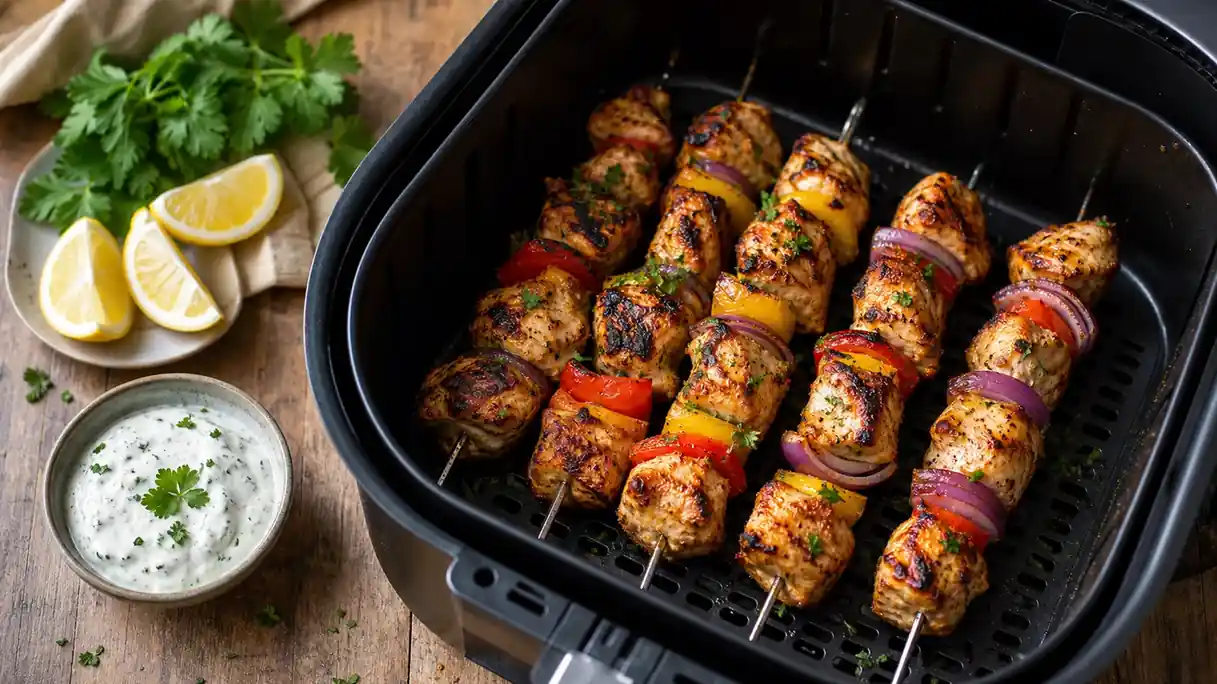
These air fryer chicken kebabs pair juicy spiced chicken thighs, peppers, and onion with a cool yogurt sauce for a colorful, easy weeknight dinner at home.
Chicken · Prep 20 minutes · Cook 14 minutes
Chipotle Honey Chicken Recipe: Easy Grilled Chicken Thighs
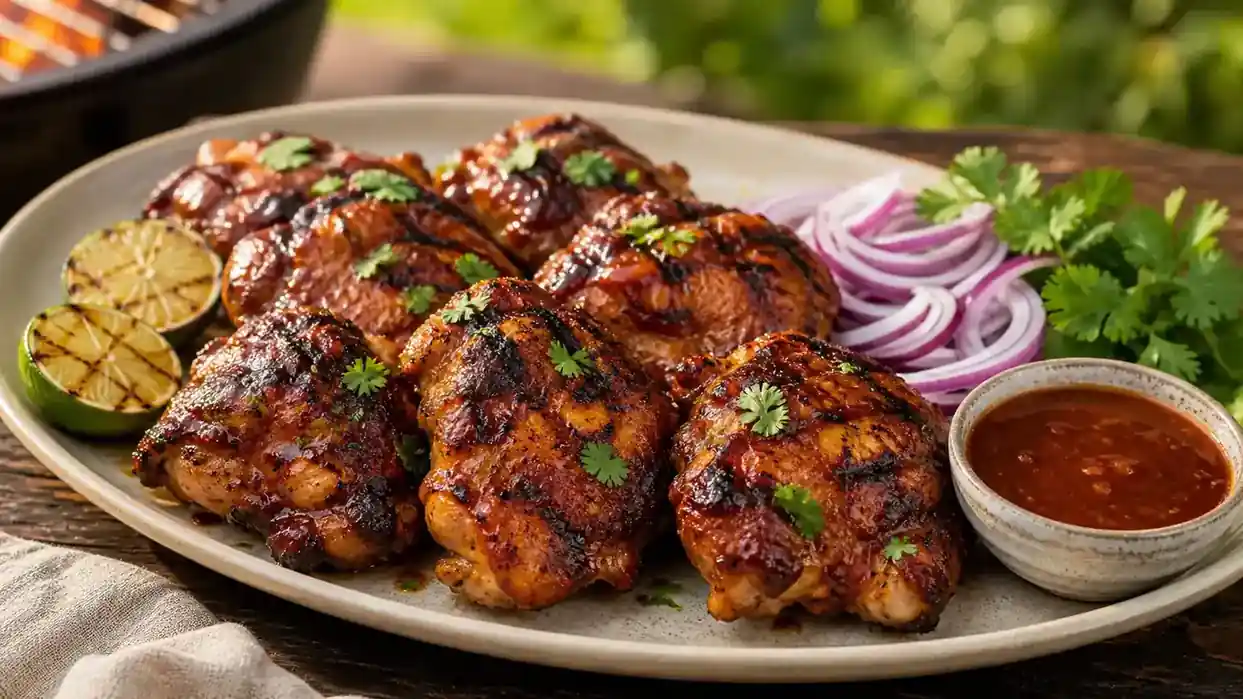
Make this chipotle honey chicken recipe with juicy grilled thighs, a smoky-sweet glaze, and simple tips for a flavorful weeknight dinner at home.
Chicken · Prep 15 minutes · Cook 15 minutes