Beef Sausage Recipes: Easy Skillet Sausage and Peppers
These beef sausage recipes start with an easy skillet sausage and peppers dinner, with savory spices, tender vegetables, and practical weeknight tips.
Prep
15 minutes
Cook
25 minutes
Rest
5 minutes
Total
45 minutes
Servings
4
Difficulty
Easy
Cut
Beef sausages
Method
Skillet cooked
Safe internal temperature
71°C / 160°F
Nutrition per serving
440 calories
- Protein
- 24g
- Fat
- 31g
- Carbs
- 18g
- Fiber
- 3g
- Sat. fat
- 11g
- Sugar
- 8g
- Sodium
- 780mg
Nutrition values are estimates based on the listed ingredients and serving size.
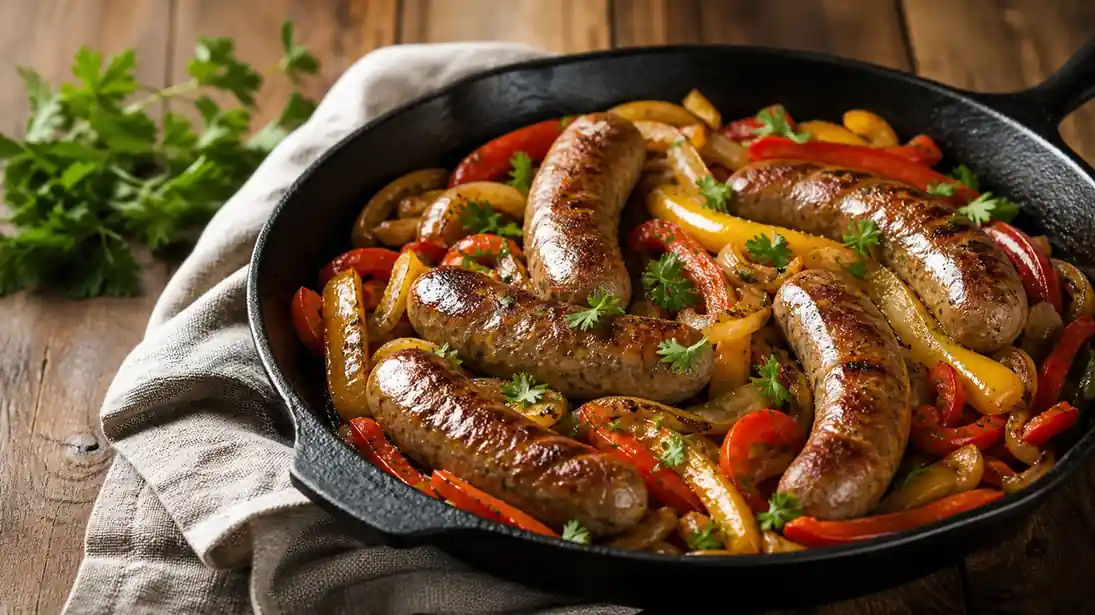
This skillet sausage and peppers dinner is one of those beef sausage recipes that earns a place in a weeknight rotation. Beef sausages, sweet peppers, onion, garlic, and a quick tomato sauce all come together in one pan, then land happily beside crusty bread, rice, or a simple green salad.
You can use raw or fully cooked beef sausages, but check the package before you start. The method below is for raw links: brown them first, then let them finish gently in the skillet until they reach a safe internal temperature. Meanwhile, the peppers and onions loosen the browned bits from the pan, giving the sauce more flavor without adding another step.
Why You’ll Love This Recipe
- It is a complete, vegetable-forward meal from one skillet.
- Finishing the beef sausages over gentle heat helps keep them juicy.
- The ingredients are familiar and easy to adapt to what you have on hand.
- It suits a weeknight dinner, meal-prep lunch, or relaxed family-style meal.
- Leftovers stay moist when reheated with a spoonful of water or sauce.
Beef Sausage Recipes: Recipe Information
| Detail | Amount |
|---|---|
| Preparation time | 15 minutes |
| Cooking time | 25 minutes |
| Resting time | 5 minutes |
| Total time | 45 minutes |
| Servings | 4 |
| Safe internal temperature | 71°C / 160°F |
Those times match the recipe details above: 15 minutes of prep, 25 minutes of cooking, a 5-minute rest, and 45 minutes in total. Thick sausages may need a few more minutes, so let the thermometer—not the clock—make the final call.
Ingredients
- 680 g (1 1/2 pounds) raw beef sausages, about 8 links
- 1 tablespoon olive oil
- 1 large yellow onion, thinly sliced
- 2 bell peppers, one red and one yellow, thinly sliced
- 3 garlic cloves, minced
- 1 teaspoon dried oregano
- 1/2 teaspoon sweet paprika
- 1/4 teaspoon black pepper
- 1/4 teaspoon red pepper flakes, optional
- 240 ml (1 cup) crushed tomatoes
- 120 ml (1/2 cup) low-sodium beef broth or water
- 1 tablespoon tomato paste
- 1 teaspoon honey
- 1 tablespoon chopped fresh parsley
- 1 tablespoon chopped fresh basil, optional
- Salt, only as needed after tasting
Choose sausages made from beef and seasonings rather than mixed meats, so the flavor and cooking guidance stay consistent. Sodium varies widely by brand, so hold off on extra salt until you have tasted the finished sauce.
Step-by-Step Instructions
1. Prepare the vegetables
Slice the onion and peppers into similarly sized strips. Mince the garlic and measure the oregano, paprika, black pepper, and red pepper flakes. It helps to have everything ready before the pan is hot; garlic can burn quickly.
2. Brown the sausages
Heat the olive oil in a large, heavy skillet over medium heat. Arrange the sausages in a single layer, leaving a little room between them. Cook for 6 to 8 minutes, turning them every couple of minutes, until browned on several sides. They do not need to be cooked through at this point. Move them to a clean plate.
Try not to pierce the links as they brown. An intact casing helps hold in the juices and keeps the pan from filling too quickly with rendered fat. If it looks especially greasy, carefully spoon off all but about 1 tablespoon before adding the vegetables.
3. Soften the peppers and onion
Add the onion and peppers to the same skillet. Cook for 6 to 7 minutes, stirring now and then, until the onion is soft and the peppers begin to soften around the edges. As they cook, scrape the bottom with a wooden spoon to work the browned bits into the sauce.
Add the garlic, oregano, paprika, black pepper, and optional red pepper flakes. Stir for 30 seconds, just until fragrant. Keep the heat at medium so the spices bloom without burning.
4. Build the quick tomato sauce
Stir in the crushed tomatoes, broth, tomato paste, and honey. The honey rounds out the acidity from the tomatoes and peppers without making the dish sweet. Bring the sauce to a gentle simmer, taste a small spoonful, and add salt only if the sausage and broth have not already done the job.
5. Finish the beef sausages
Return the sausages and any juices from the plate to the skillet, nestling them into the sauce and vegetables. Cover loosely and simmer for 8 to 10 minutes, turning the links once, until the thickest sausage reaches 71°C / 160°F on an instant-read thermometer.
For an accurate reading, insert the thermometer into the center of a link without touching the skillet. Do not judge doneness by color alone; seasoning can leave some beef sausages slightly pink even when they are safely cooked.
6. Rest and serve
Take the skillet off the heat and leave it uncovered for 5 minutes. The rest lets the juices settle and gives the sauce a little time to thicken. Scatter over the parsley and optional basil just before serving.
Tips for Best Results
Reach for a wide skillet instead of a small saucepan. The larger surface helps the peppers soften rather than steam and gives the sausages room to brown. If the pan feels crowded, brown the links in two batches.
Once the sausages return to the pan, keep the sauce at a gentle simmer. A hard boil can toughen the casing and split the links, while a low, steady bubble cooks the centers through more gently.
For more caramelized peppers, give them an extra 3 to 5 minutes before adding the garlic. Add another splash of broth at the end for a looser, spoonable sauce. Prefer it thicker? Uncover the pan for the final few minutes.
For another quick, pan-cooked dinner with a deeper browned flavor, try easy ground beef skillet dinners.
Ingredient Substitutions
Swap in an orange or green bell pepper for one of the listed peppers. Orange peppers keep the dish sweet, while green peppers bring a more savory, slightly bitter edge. A red onion also works in place of yellow, though the sauce will be a little sweeter.
If you do not have crushed tomatoes, briefly blend canned diced tomatoes or use passata. With a very thick tomato puree, add an extra 60 ml (1/4 cup) broth. Tomato paste gives the sauce body, but you can leave it out and simmer a few minutes longer.
Fresh oregano can replace dried; use 1 tablespoon and add it with the parsley near the end. To adjust the heat, skip the pepper flakes or add a pinch of cayenne. Keep the main method intact: browned sausage, softened vegetables, and a gentle finish are what make these beef sausage recipes dependable.
What to Serve With
Serve the sausages and peppers over steamed rice, creamy mashed potatoes, or buttered couscous. Toasted bread is especially good for the tomato sauce. For a lighter plate, add lemony greens or roasted green beans.
For a fuller menu, browse Italian beef recipes for compatible flavors, or make beef stew stovetop recipes when another rich, comforting dinner sounds right. A crisp cucumber salad with lemon and olive oil also balances the warmth of the skillet.
Storage Instructions
Cool leftovers within 2 hours, then transfer the sausages and sauce to a shallow airtight container. Refrigerate for up to 3 days. Keeping the links covered in sauce helps prevent them from drying out.
For longer storage, freeze cooled portions in freezer-safe containers for up to 2 months, leaving a little room at the top for expansion. Thaw overnight in the refrigerator before reheating; do not thaw cooked sausages on the counter.
Reheating Instructions
Reheat refrigerated leftovers in a covered skillet over medium-low heat with 1 to 2 tablespoons of water or broth. Turn the sausages occasionally and heat until their centers reach 74°C / 165°F. For individual portions, use a covered microwave-safe bowl at medium power and stir the vegetables once halfway through.
Frozen leftovers are best thawed first. If you reheat from frozen, use low heat with a lid and a little broth so the sauce loosens as the center warms. Reheat only the portion you plan to eat instead of cooling and warming the same batch repeatedly.
Frequently Asked Questions
Can I use fully cooked beef sausage?
Yes. Brown fully cooked links for 4 to 5 minutes for color, then simmer them in the sauce only until hot throughout. Their safe reheating target is 74°C / 165°F, so they do not need the full finishing time for raw sausages.
How do I know when raw beef sausage is done?
Check the center of the thickest link with an instant-read thermometer. Raw ground-beef sausage should reach 71°C / 160°F. That is more accurate than cutting a link open, which lets out juices and can leave it dry.
Can I make this ahead?
Yes. Cook the dish, cool it promptly, and refrigerate it for up to 3 days. The pepper and tomato flavors develop nicely overnight. Reheat gently with a splash of broth to loosen the sauce.
What makes the sauce taste flat?
It usually needs a little salt, a pinch more pepper, or a fresh finish. Taste after the sausages are cooked, then add chopped parsley, basil, or a squeeze of lemon. A small final adjustment works better than over-seasoning at the start.
Nutrition Estimate
Per serving, this recipe provides an estimated 440 calories, 24 g protein, 31 g fat, 11 g saturated fat, 18 g carbohydrate, 3 g fiber, 8 g sugar, and 780 mg sodium. These are estimates based on the listed ingredients and four servings; the sausage brand will have the greatest effect on fat, calories, and sodium.
Conclusion
For beef sausage recipes that are easy to repeat, this one-pan method delivers: brown the links well, let the peppers soften, then finish everything in a gentle tomato sauce. Once you have the method down, explore more beef recipes and use it with your favorite vegetables and seasonings.
Keep cooking
You might also like
Easy Beef Gravy Recipe for Tender Skillet Steak Dinner
This beef gravy recipe makes tender skillet steak with onions and a rich homemade pan sauce for a comforting family dinner ready in only 40 minutes tonight.
Beef · Prep 15 minutes · Cook 20 minutes
Beef Bottom Round Steak Recipes: Easy Braised Steaks
Make tender beef bottom round steak recipes with a quick sear, savory onion gravy, and simple stovetop braising for an easy family dinner tonight.
Beef · Prep 15 minutes · Cook 45 minutes
Shaved Beef Recipes: Easy Skillet Beef and Peppers
Make shaved beef recipes at home with tender sirloin, sweet peppers, and onions in a fast, savory skillet dinner for weeknights, ready in just 32 minutes.
Beef · Prep 15 minutes · Cook 12 minutes