Pan-Fried Beef Liver Recipe with Caramelized Onions
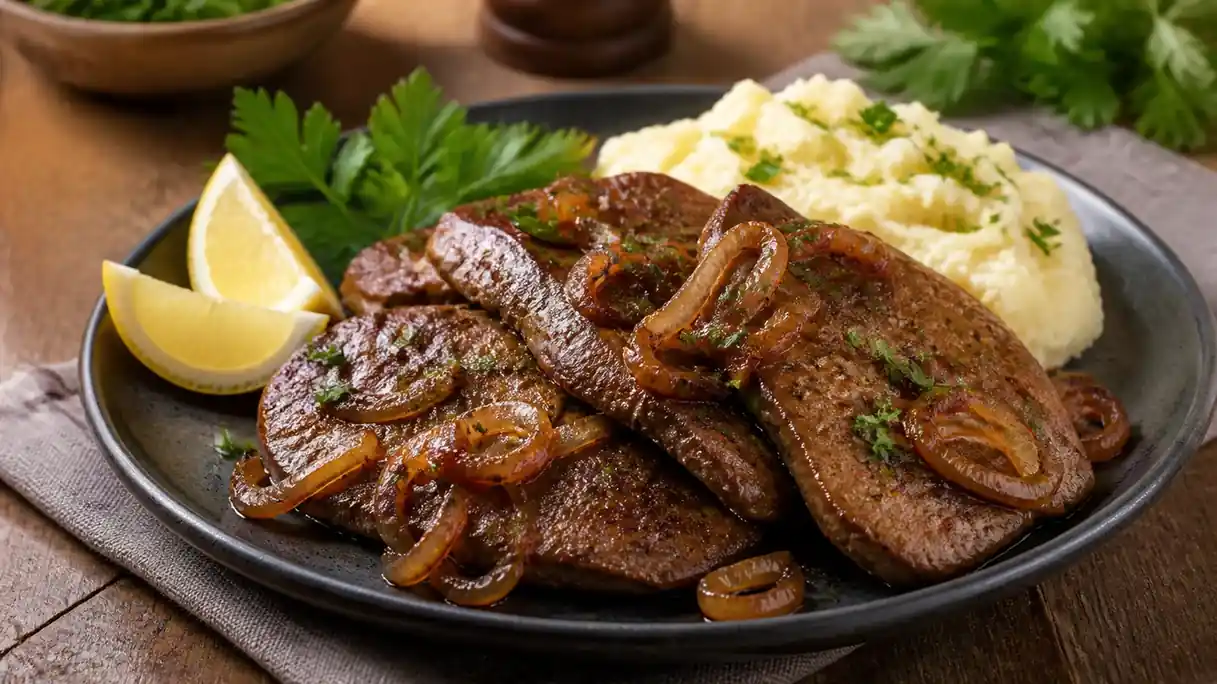
This beef liver recipe with caramelized onions makes tender, savory pan-fried liver with creamy potatoes for a simple, comforting dinner at home tonight.
Prep
15 minutes
Cook
25 minutes
Rest
5 minutes
Total
45 minutes
Servings
4
Difficulty
Easy
Cut
Sliced beef liver
Method
Pan fried
Safe internal temperature
71°C / 160°F
Nutrition per serving
515 calories
- Protein
- 39g
- Fat
- 19g
- Carbs
- 49g
- Fiber
- 5g
- Sat. fat
- 8g
- Sugar
- 7g
- Sodium
- 430mg
Nutrition values are estimates based on the listed ingredients and serving size.
Pan-Fried Beef Liver Recipe with Caramelized Onions
This beef liver recipe pairs tender pan-fried slices with sweet onions, a quick lemon pan sauce, and creamy mashed potatoes. The method is simple: soak the liver briefly in milk, let the onions cook until soft and golden, then sear the liver quickly in a hot skillet.
Beef liver cooks faster than a steak or roast, so finish the potatoes and onions before you start frying it. A light flour coating helps the slices brown, while lemon keeps the rich flavor in balance. If liver and onions are new to you, this is a clear, manageable way to try the combination.
Why You'll Love This Recipe
- The skillet method cooks the liver quickly without a long marinade.
- Sweet onions and lemon balance beef liver's earthy richness.
- Mashed potatoes soak up the pan juices.
- The ingredients are inexpensive, familiar, and easy to find.
- Leftovers can become a hearty lunch bowl.
Beef Liver Recipe Information
| Detail | Time or amount |
|---|---|
| Preparation | 15 minutes |
| Cooking | 25 minutes |
| Resting | 5 minutes |
| Total | 45 minutes |
| Servings | 4 |
| Internal temperature | 71°C / 160°F |
Plan to serve the liver soon after cooking. For food safety, use an instant-read thermometer and cook the thickest part to 71°C / 160°F. A five-minute rest gives the juices time to settle while you finish the plate.
Ingredients
For the beef liver and onions
- 680 g / 1 1/2 pounds sliced beef liver, trimmed of any tough connective tissue
- 240 ml / 1 cup whole milk, for soaking
- 2 large yellow onions, thinly sliced
- 3 tablespoons all-purpose flour
- 1 teaspoon sweet paprika
- 3/4 teaspoon kosher salt, divided
- 1/2 teaspoon freshly ground black pepper
- 2 tablespoons unsalted butter, divided
- 1 tablespoon olive oil
- 120 ml / 1/2 cup low-sodium beef broth
- 1 tablespoon fresh lemon juice
- 2 tablespoons chopped flat-leaf parsley
For the mashed potatoes
- 680 g / 1 1/2 pounds Yukon Gold potatoes, peeled and cut into chunks
- 2 tablespoons unsalted butter
- 120 ml / 1/2 cup warm milk
- 1/2 teaspoon kosher salt
Choose evenly colored liver cut into slices about 1 cm / 1/2 inch thick. If the slices are noticeably different in size, cook the thickest pieces first so the thinner ones are not left waiting in the hot pan.
Step-by-Step Instructions
1. Soak and prepare the liver
Place the liver in a shallow bowl and pour the milk over it. Leave it for 10 minutes while you start the potatoes and slice the onions. The soak mellows the flavor, and it does not need to take all day. Drain the liver and pat every piece very dry with paper towels. Dry surfaces brown better and hold onto the flour coating.
2. Cook the potatoes
Put the potatoes in a saucepan, cover them with cold water by 2.5 cm / 1 inch, and add the salt. Bring the water to a boil, then reduce to a steady simmer for 15 to 18 minutes, until a fork slips easily through the centers. Drain well, return the potatoes to the warm pot, and mash them with the butter and warm milk. Cover and keep warm.
3. Caramelize the onions
Heat 1 tablespoon of the butter and the olive oil in a large skillet over medium heat. Add the onions and 1/4 teaspoon salt. Cook for 12 to 15 minutes, stirring often, until they are very soft and golden brown. If the pan starts to catch before the onions are tender, add a tablespoon of water and scrape up the browned bits. Transfer the onions to a bowl and cover.
4. Season the beef liver
Combine the flour, paprika, remaining 1/2 teaspoon salt, and pepper on a plate. Coat the dried liver lightly on both sides, then shake off the excess. A thin layer is enough; too much flour can turn pasty in the skillet and mask the liver's savory flavor.
5. Pan fry the liver
Add the remaining tablespoon of butter to the same skillet and raise the heat to medium-high. When the butter foams, arrange half the liver in a single layer. Cook for 2 to 3 minutes per side, until browned and the center reaches 71°C / 160°F. Transfer the slices to a warm plate and repeat with the rest. Work in batches so the pan stays hot and the liver browns instead of steaming.
6. Finish the onion pan sauce
Lower the heat to medium. Pour in the beef broth and scrape the skillet with a wooden spoon. Simmer for 1 to 2 minutes, then stir in the caramelized onions and lemon juice. Spoon the onions and pan juices over the liver. Let the plate rest for 5 minutes, sprinkle with parsley, and serve with the mashed potatoes.
Tips for Best Results
The most important thing with beef liver is avoiding overcooking. It firms up quickly, so treat the stated time as a guide and use a thermometer for the final decision. Move each piece out of the skillet as soon as it reaches 71°C / 160°F rather than leaving it in the hot pan while you make the sauce.
Give the onions time to cook slowly. Their sweetness contrasts with the liver, while rushing them over high heat can make them bitter. A large, heavy skillet, such as cast iron or stainless steel, also browns more reliably than a thin pan.
If the liver pieces are especially large, cut them into palm-sized portions before soaking. They will cook more evenly and be easier to turn. Keep the flour coating light, and add the lemon after lowering the heat so its fresh flavor stays bright.
Ingredient Substitutions
Red onions work in place of yellow onions, although they make a slightly sweeter, softer sauce. For a gluten-free coating, use a 1:1 gluten-free flour blend or fine rice flour. Chicken broth can stand in for beef broth; the sauce will be lighter but will still pick up the browned bits from the skillet.
Russet potatoes can replace Yukon Golds, but add a little less milk at first because they absorb more liquid. For a dairy-free version, skip the milk soak, use unsweetened plain oat milk in the potatoes, and cook the liver and onions in olive oil. The finished dish will be less creamy but still satisfying.
What to Serve With Beef Liver
Mashed potatoes are ideal for catching the onion pan sauce, but buttery rice or roasted sweet potatoes also work well. Add a crisp green vegetable, such as steamed green beans, broccoli, or a sharp arugula salad, for contrast.
For more practical dinner ideas, browse easy ground beef skillet dinners, beef stew recipes, and beef sirloin tip roast. Slow cooker beef stew is another cozy choice for a cold-weather meal.
Storage Instructions
Cool leftovers promptly and refrigerate them in a shallow, covered container within 2 hours. Store the liver, onions, and potatoes for up to 3 days at 4°C / 40°F or colder. Keep the onion sauce with the liver to help it stay moist.
You can freeze the liver and onion sauce for up to 2 months, although the liver may be a little more crumbly after thawing. For the best texture, freeze those two components and make fresh potatoes when you are ready to serve. Thaw overnight in the refrigerator, never on the counter.
Reheating Instructions
Reheat the liver and onions gently in a covered skillet over low heat with a splash of broth or water. Warm for 4 to 6 minutes, turning once, until the center reaches 71°C / 160°F. Avoid high heat; it can toughen the liver before the middle is warm.
Reheat the mashed potatoes in the microwave or a small saucepan with a splash of milk. Stir until smooth and hot. A fresh squeeze of lemon and a pinch of parsley after reheating will brighten the flavors.
Frequently Asked Questions
Should beef liver be soaked in milk?
A brief milk soak is optional, but it can help if you are new to liver. It mellows the flavor and gives you time to prepare the onions and potatoes. Ten minutes is enough for this recipe; drain and dry the liver well before coating it.
Why is my liver tough?
Tough liver is usually the result of overcooking or overcrowding the pan. Cook it in batches in a hot skillet, and remove each piece as soon as it reaches 71°C / 160°F. Leaving it in the pan after cooking will continue to firm it up.
Can I make this recipe without mashed potatoes?
Yes. Serve the liver and onions over rice, polenta, roasted potatoes, or crusty bread. Pick a side that can catch the savory onion pan sauce.
Can I prepare the onions ahead?
Yes. Caramelize the onions up to two days ahead and refrigerate them in a covered container. Warm them in the skillet after cooking the liver, then add the broth and lemon to make the quick sauce.
Conclusion
The best results come from a few small details: soak and dry the liver, give the onions time to soften, and take the slices off the heat as soon as they reach a safe temperature. With lemon, parsley, and creamy potatoes alongside, this beef liver recipe makes a comforting skillet dinner from an economical cut.
Keep cooking
You might also like

Easy Slow Cooker Beef Stew Recipe with Tender Chuck
Make this beef stew recipe slow cooker style with tender chuck, vegetables, and a rich savory broth for an easy, comforting family dinner at home tonight.
Beef · Prep 20 minutes · Cook 8 hours

Easy Roast Beef Sliders Recipe with Caramelized Onions
Make this roast beef sliders recipe with tender beef, melted cheese, caramelized onions, and savory au jus for an easy, party-ready dinner everyone will love.
Beef · Prep 15 minutes · Cook 15 minutes
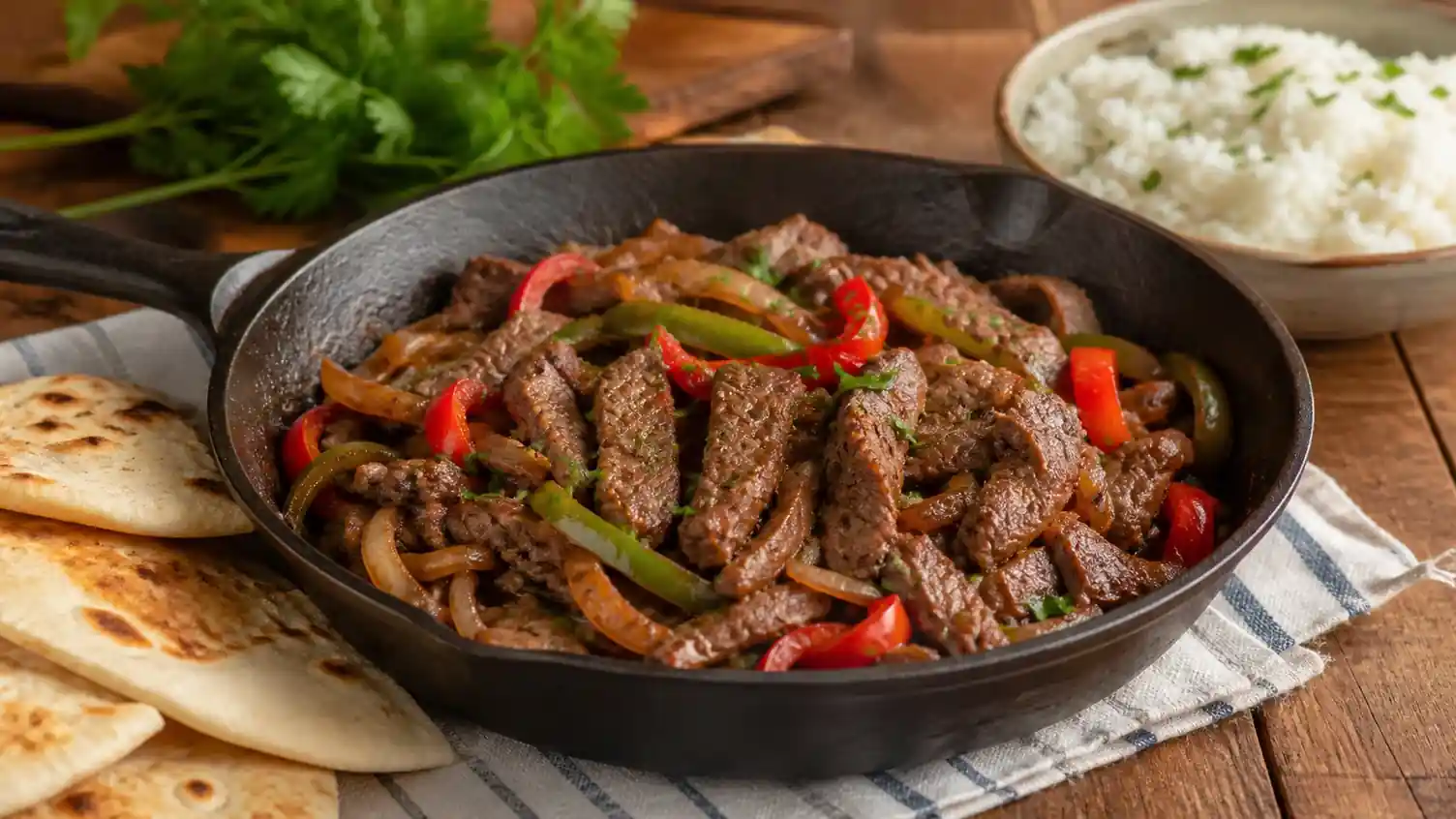
Shaved Beef Recipes: Easy Skillet Beef and Peppers
Make shaved beef recipes at home with tender sirloin, sweet peppers, and onions in a fast, savory skillet dinner for weeknights, ready in just 32 minutes.
Beef · Prep 15 minutes · Cook 12 minutes